2010-2024
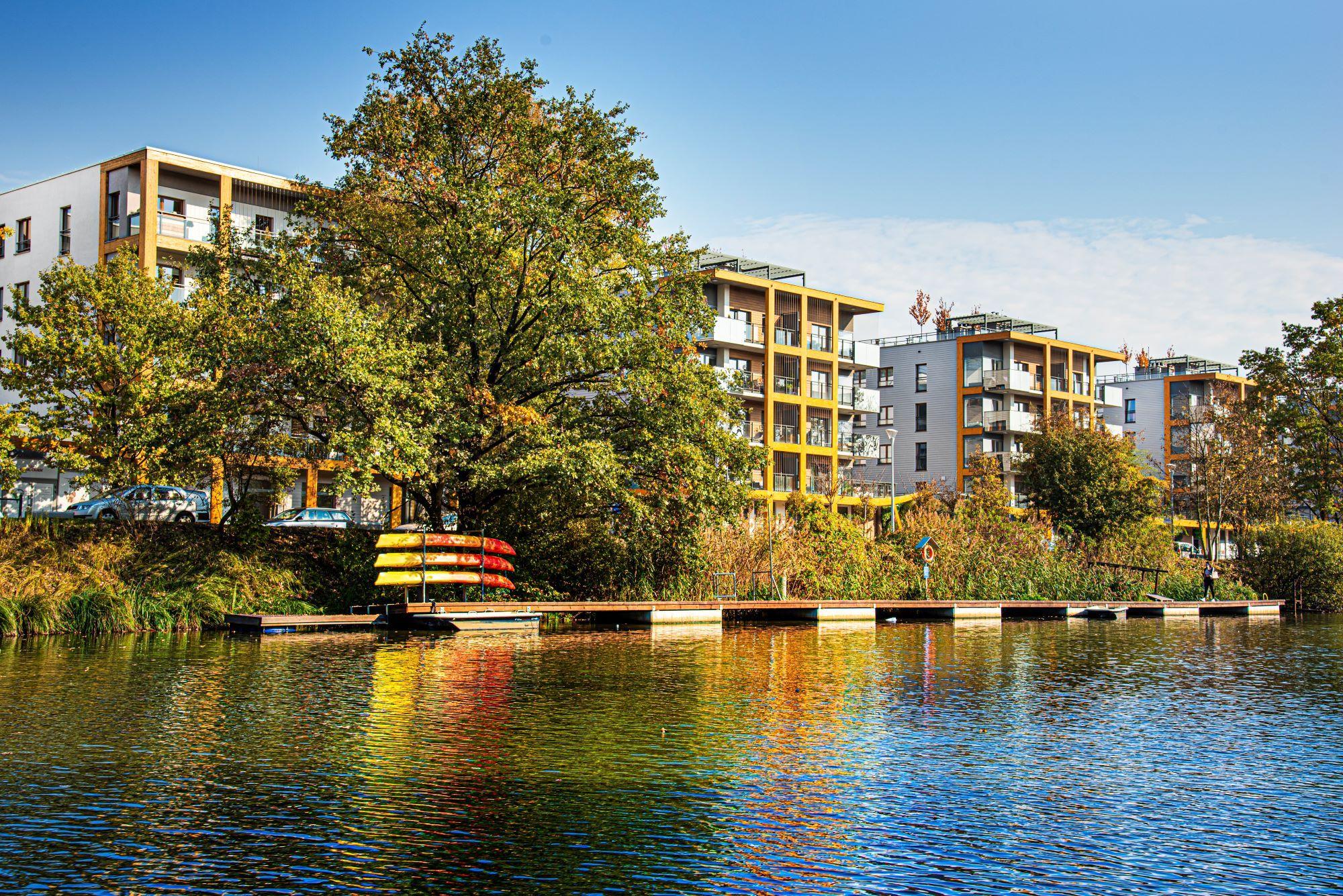
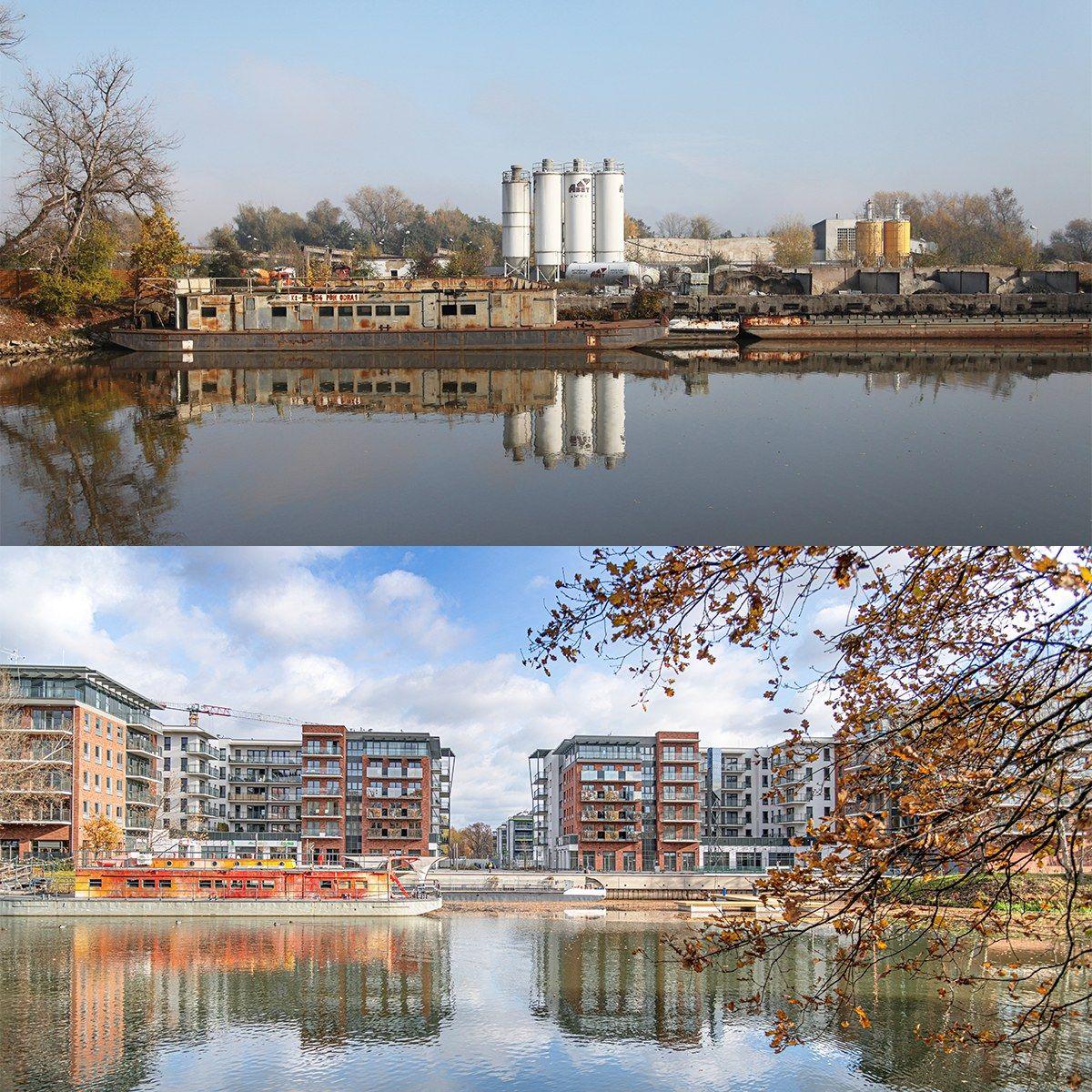
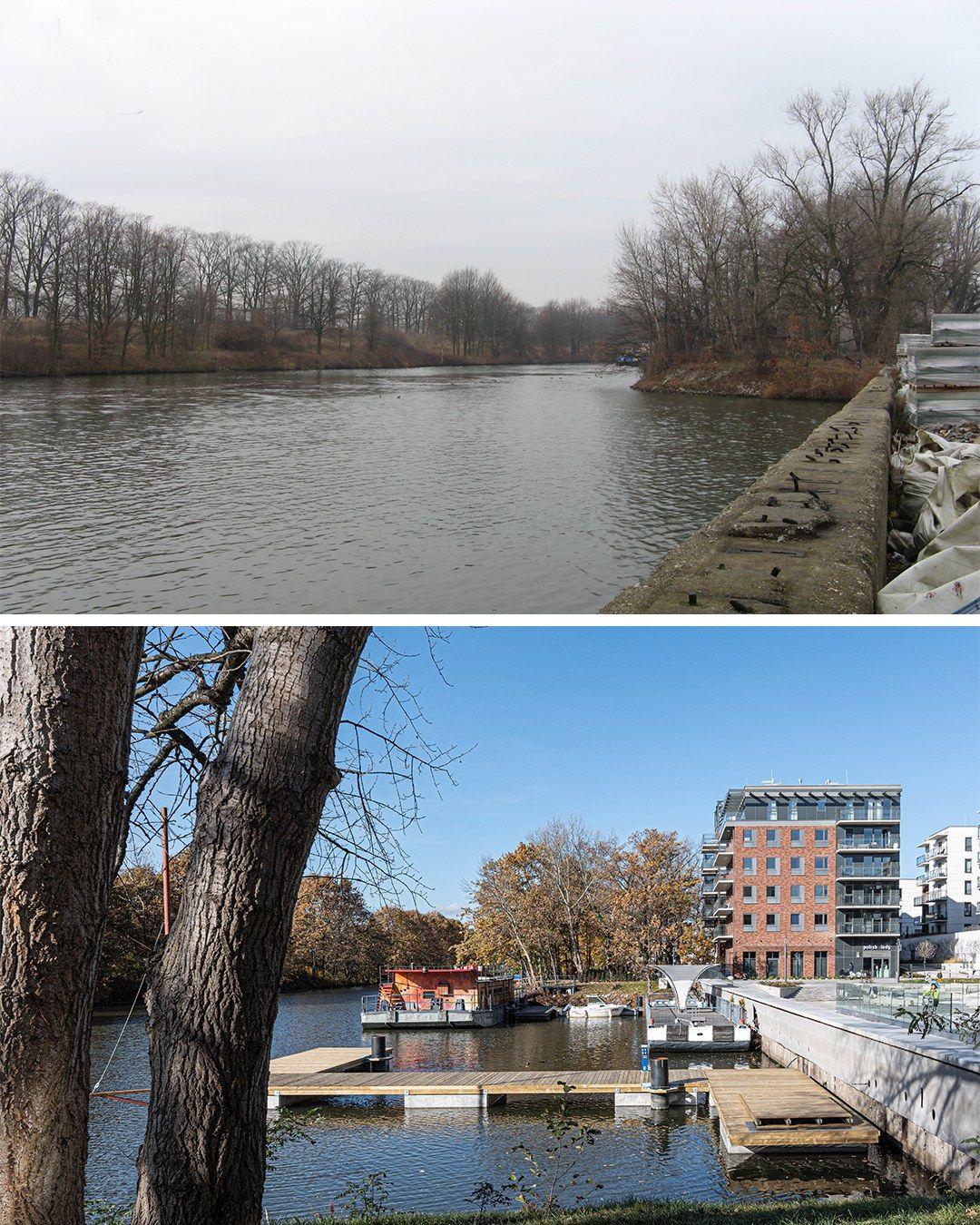
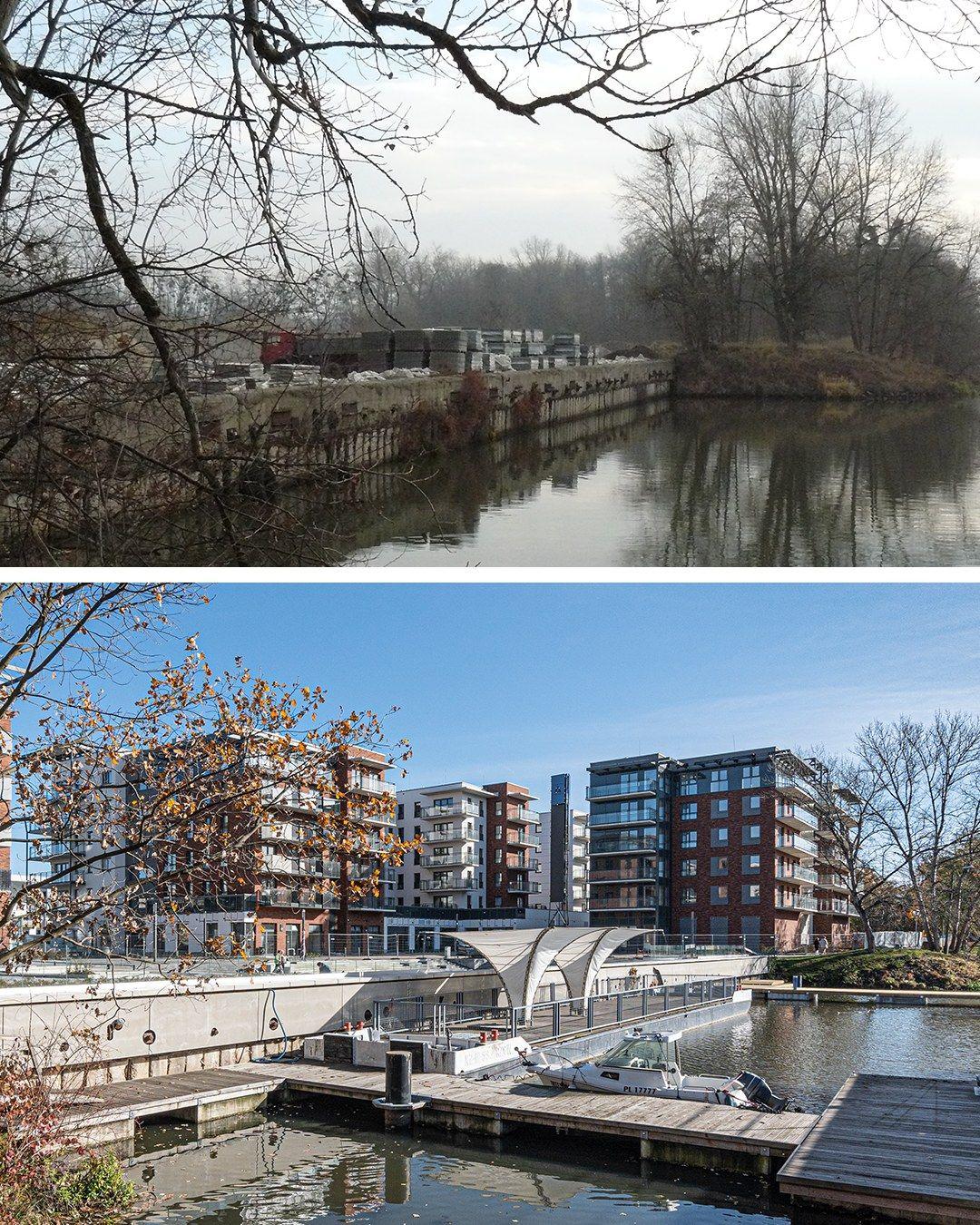
Once, this was considered the end of the world. We designed an estate where the value per square meter has already quadrupled compared with the original price. Charles Montgomery, the author of Happy City, recognized it as a place that is good to live in.
Land area covered by the local ppatial development plan (MPZP)
35 ha
Residential development area
20,84 ha
Total site area
273 500 m²
Usable floor area(PUM)
169 800 m²
Unit mix - residential and commercial
2976
Number of storeys above grade
IV-VI
Share
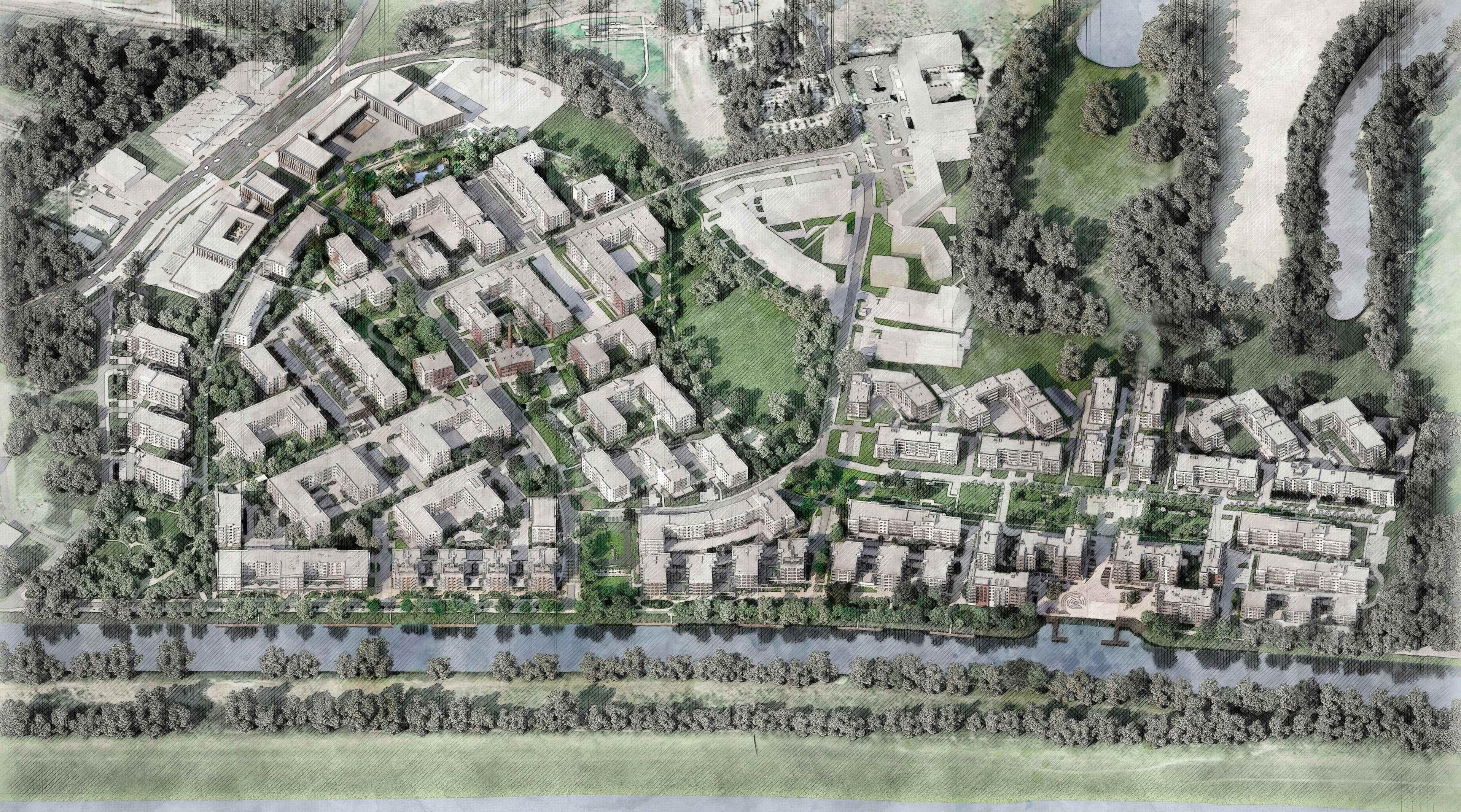
Olimpia Port provides residents with a complete service package, meeting all essential daily needs within the community.
PROJECT INTRODUCTION
Olimpia Port entailed a comprehensive transformation of a brownfield into a residential district for 10,000 inhabitants. SRDK STUDIO created a harmonious urban space that combines residential and service functions while preserving elements of industrial heritage and taking advantage of its riverside location. The project was completed in fourteen stages.
Work on the zoning plan
Sealing the urban fabric. Local and industry media consistently view Olimpia Port as a pioneering project on the scale of Wroclaw. A vibrant waterfront district has emerged, successfully integrating housing, services, greenery and culture while catalyzing the further development of the city along the eastern banks of the Odra River.
Architects involved in the project emphasize the importance of quality of life. In interviews, the designers from Archicom explained that Olimpia Port intentionally avoided the maximum densification of buildings in favor of extensive green areas, as this directly enhances resident comfort and ensures lasting value. These assumptions proved right. Olimpia Port achieved commercial success while creating a new urban space along the Odra that serves not only estate residents but the whole city. The construction of riverside parks, promenades and infrastructure such as a marina opened access to the river in this part of Wroclaw, activating social and cultural life east of the city center.
PROJECT FEATURES
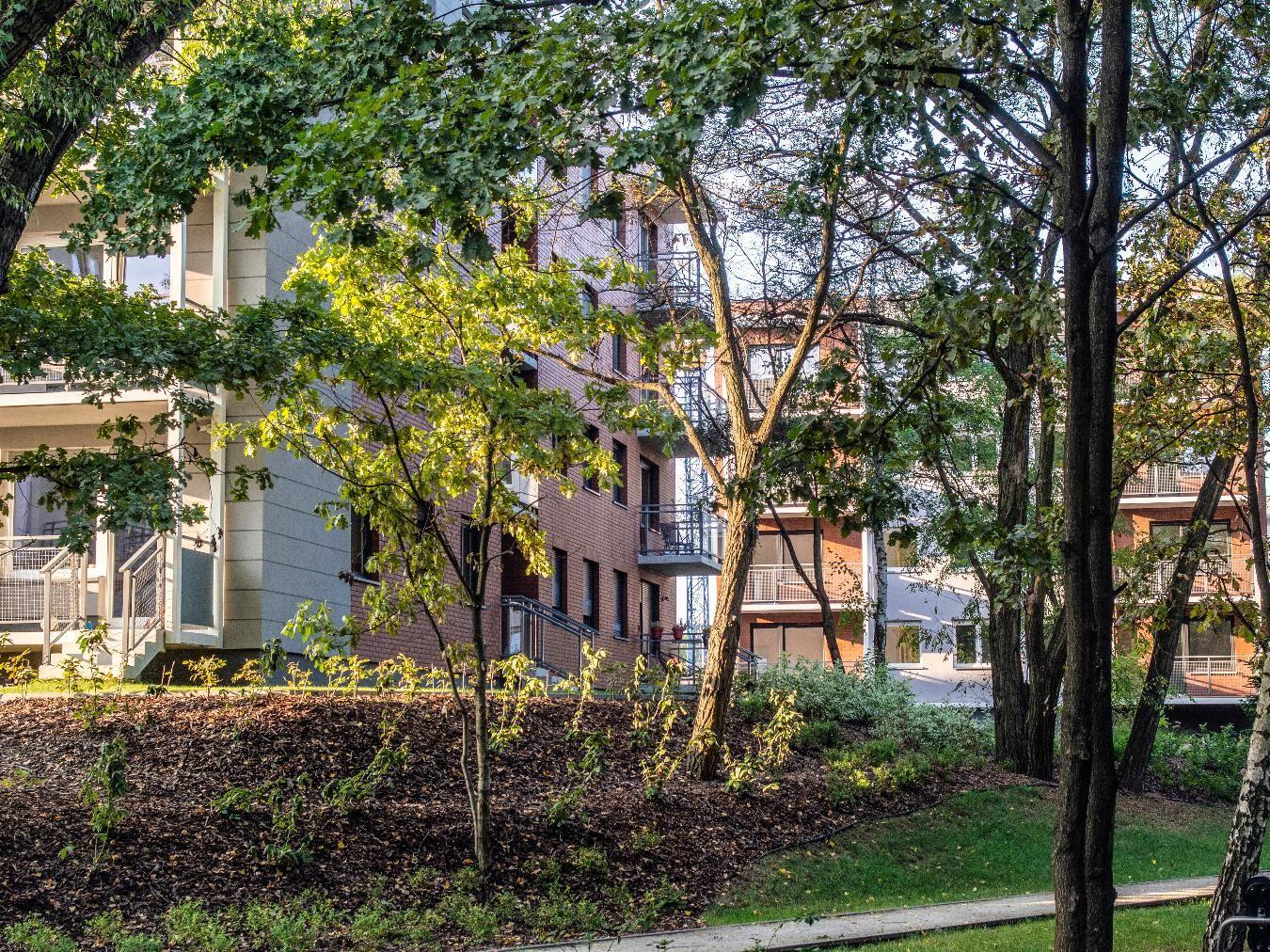
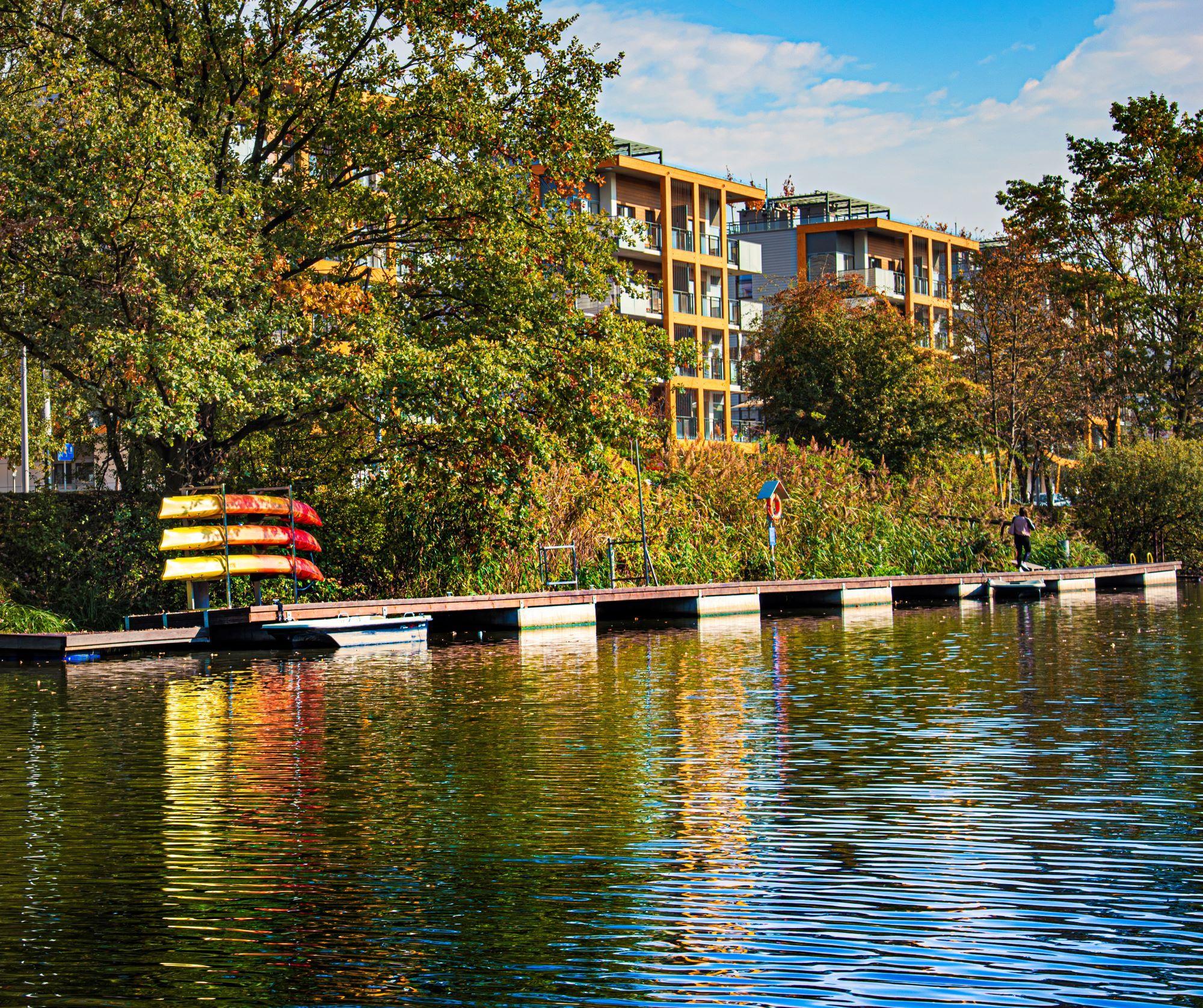
Optimally sunlit residential blocks with four-story buildings foster community interaction. The main squares, the marina with service functions and the green market, form the key public spaces along the river. A pedestrian boulevard runs alongside the water, lined with waterfront buildings filled with cafes and retail and service points.
Completeness and accessibility of the estate
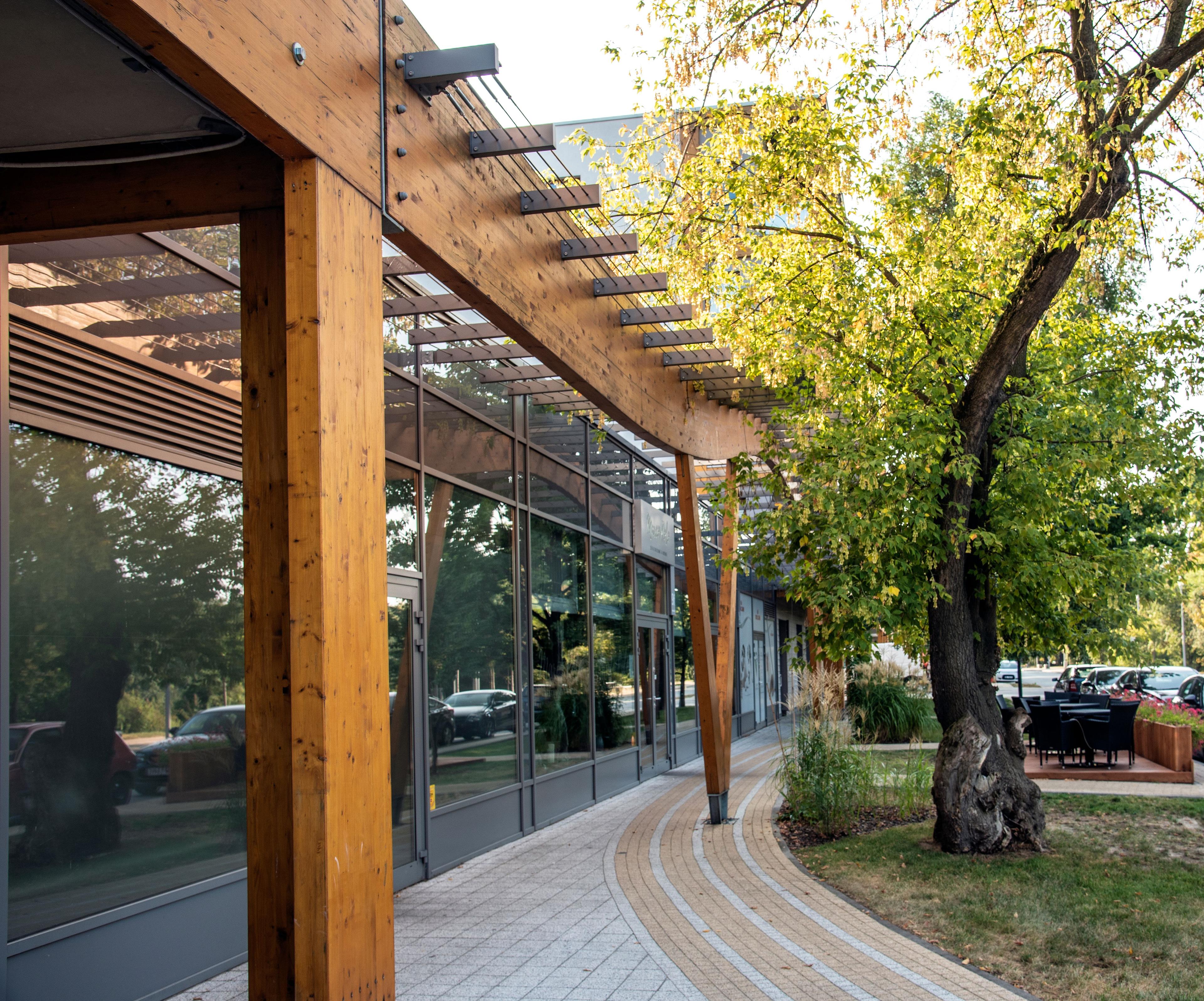
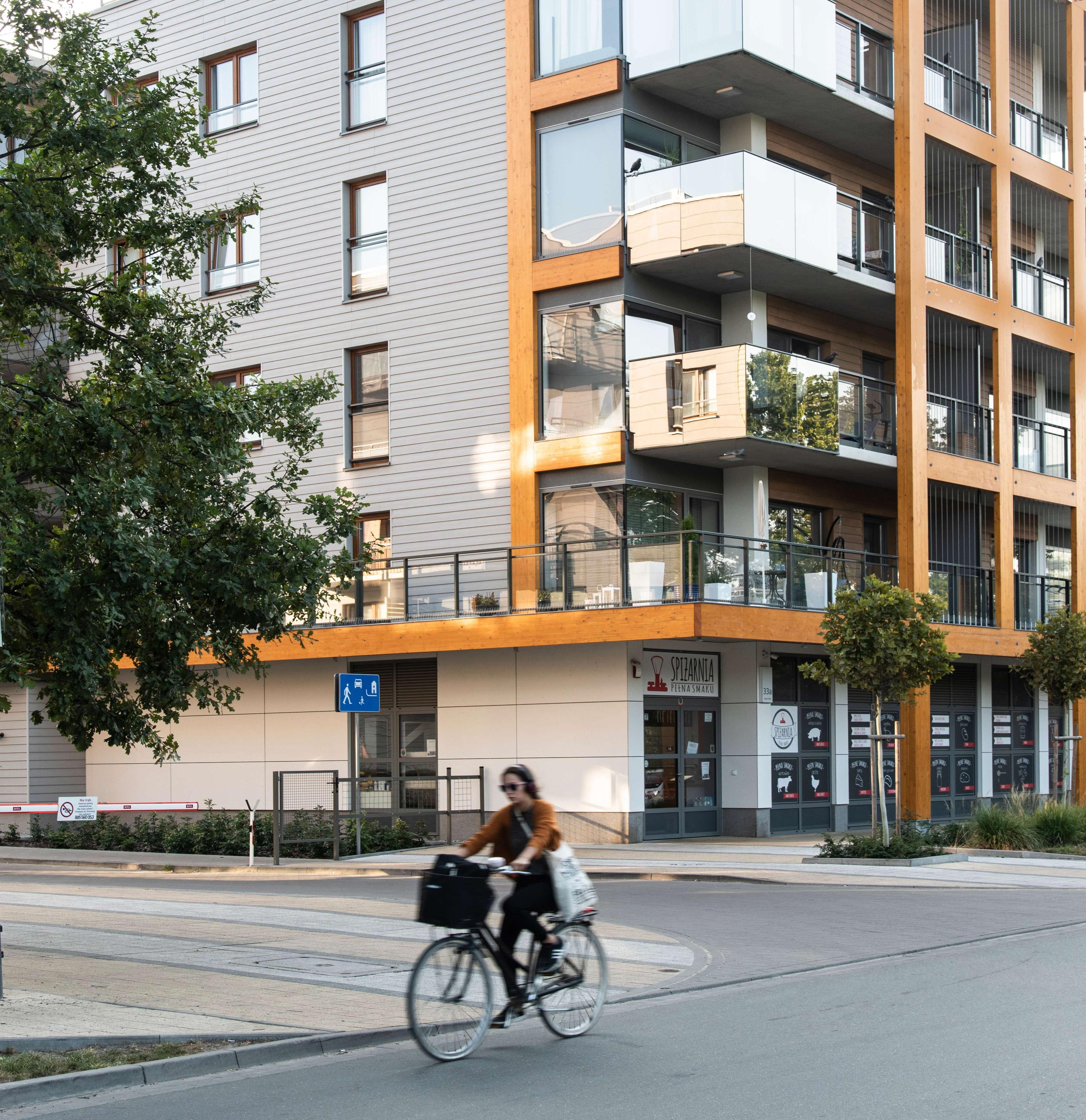
Olimpia Port offers its residents a full range of urban infrastructure within a short walking distance. The carefully designed residential blocks are complemented by ground-floor services, public squares, and green areas. The team at SRDK STUDIO designed the estate as a self-sufficient district where every day needs can be met. An extensive service zone of around fifty retail and service units on the ground floors, along with numerous recreational amenities including fitness clubs, sports fields, playgrounds and a kayak marina, makes Olimpia Port a practically self-sufficient mini-district.
Access to recreation facilities
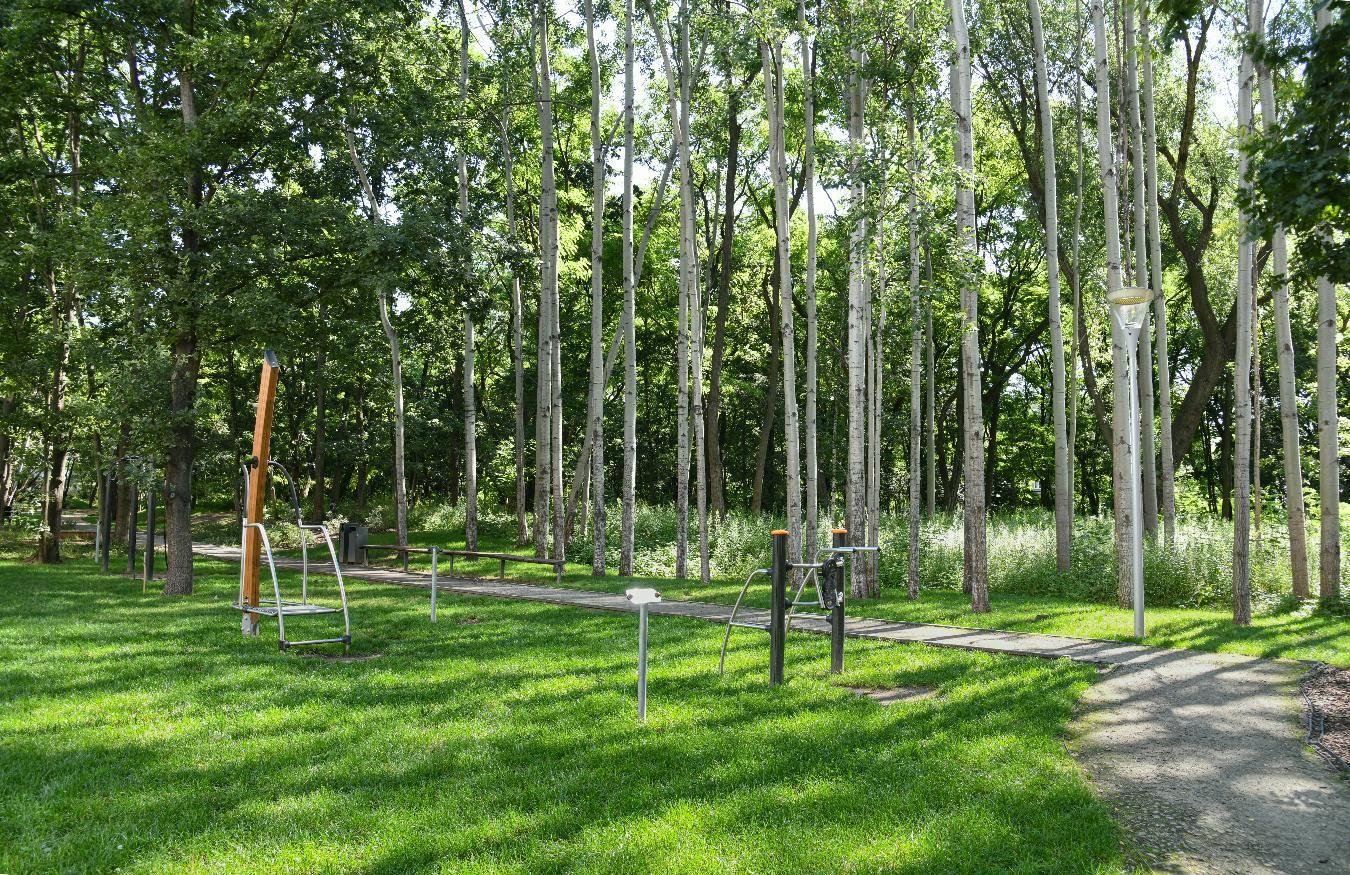
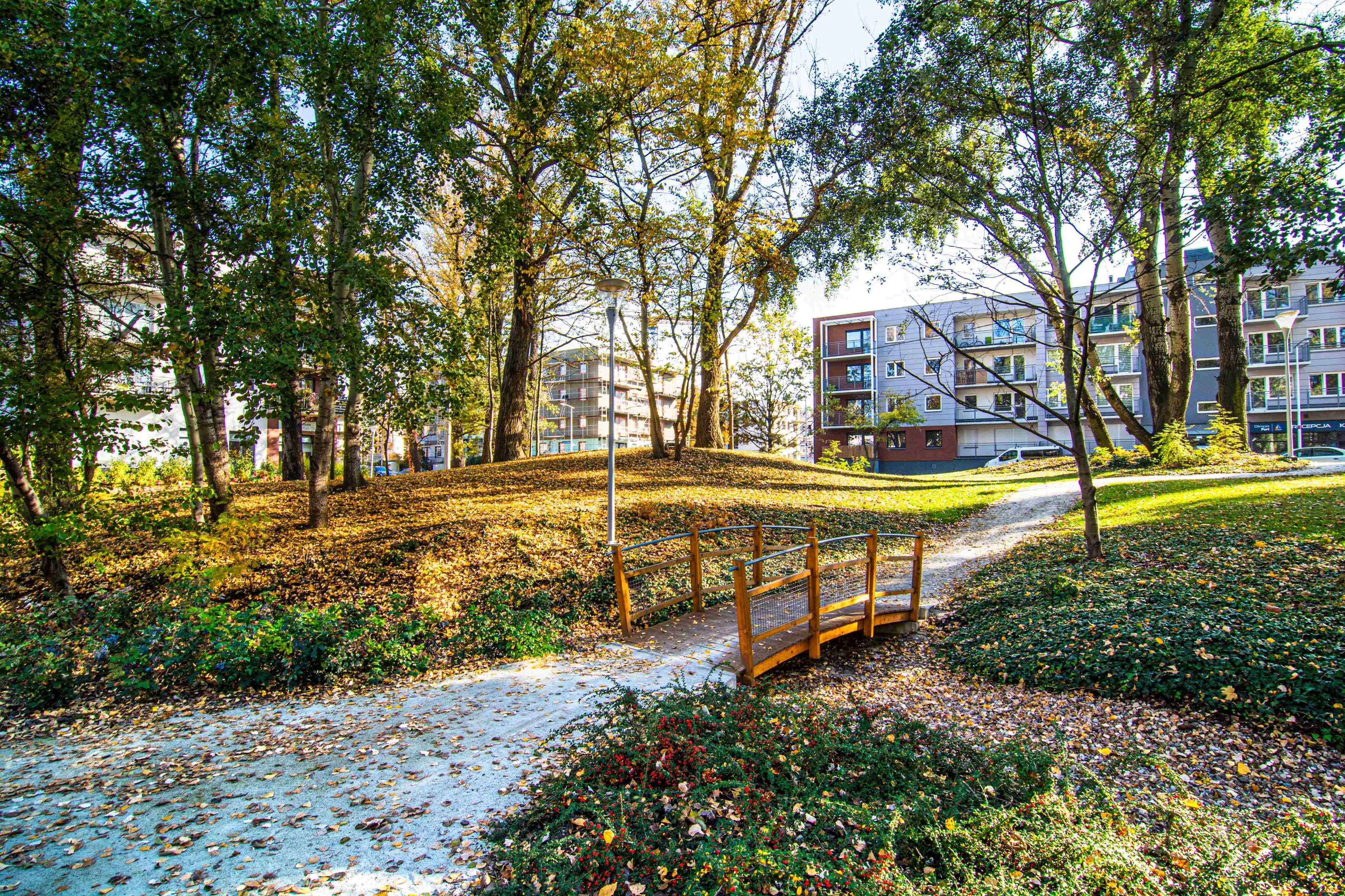
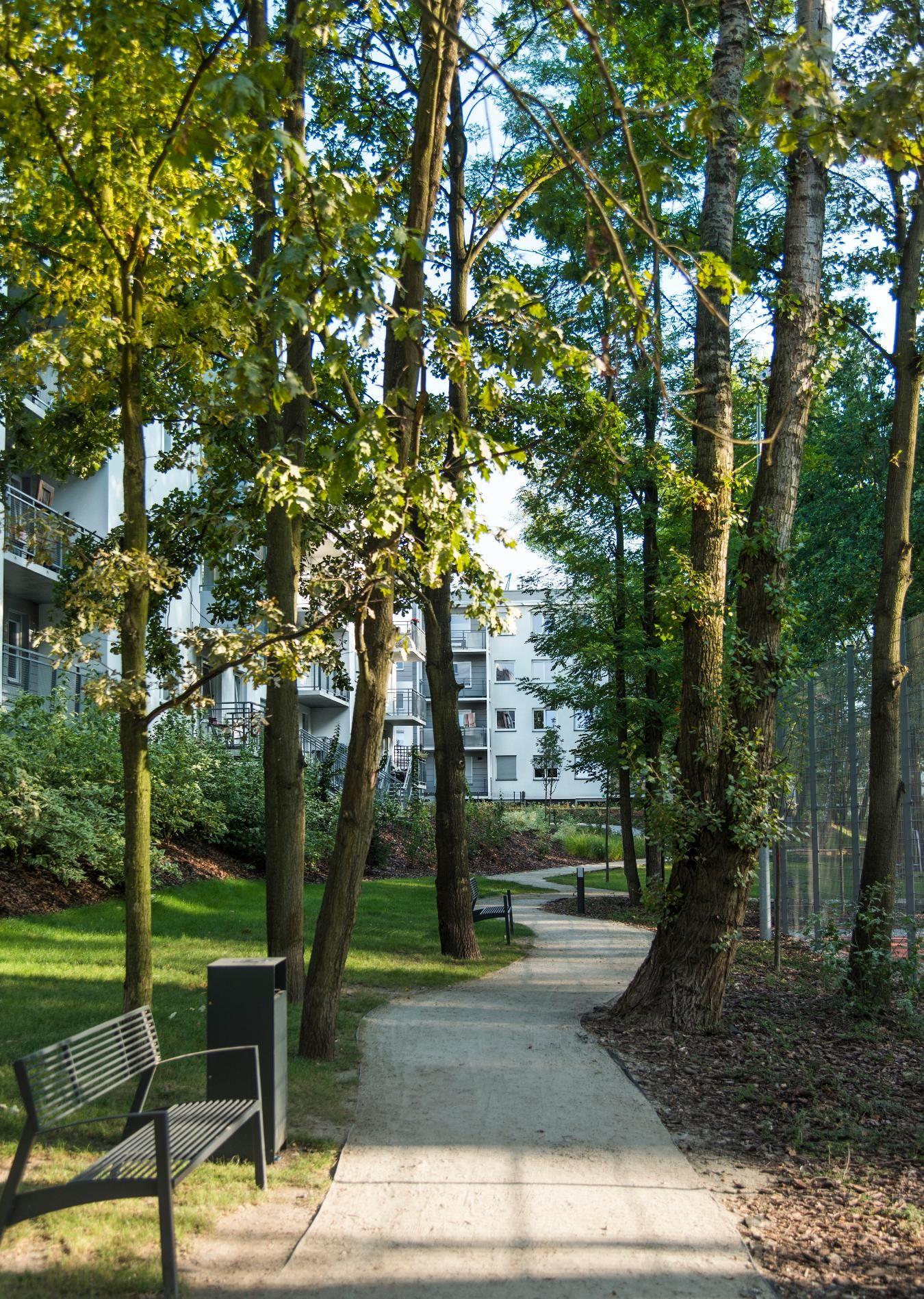
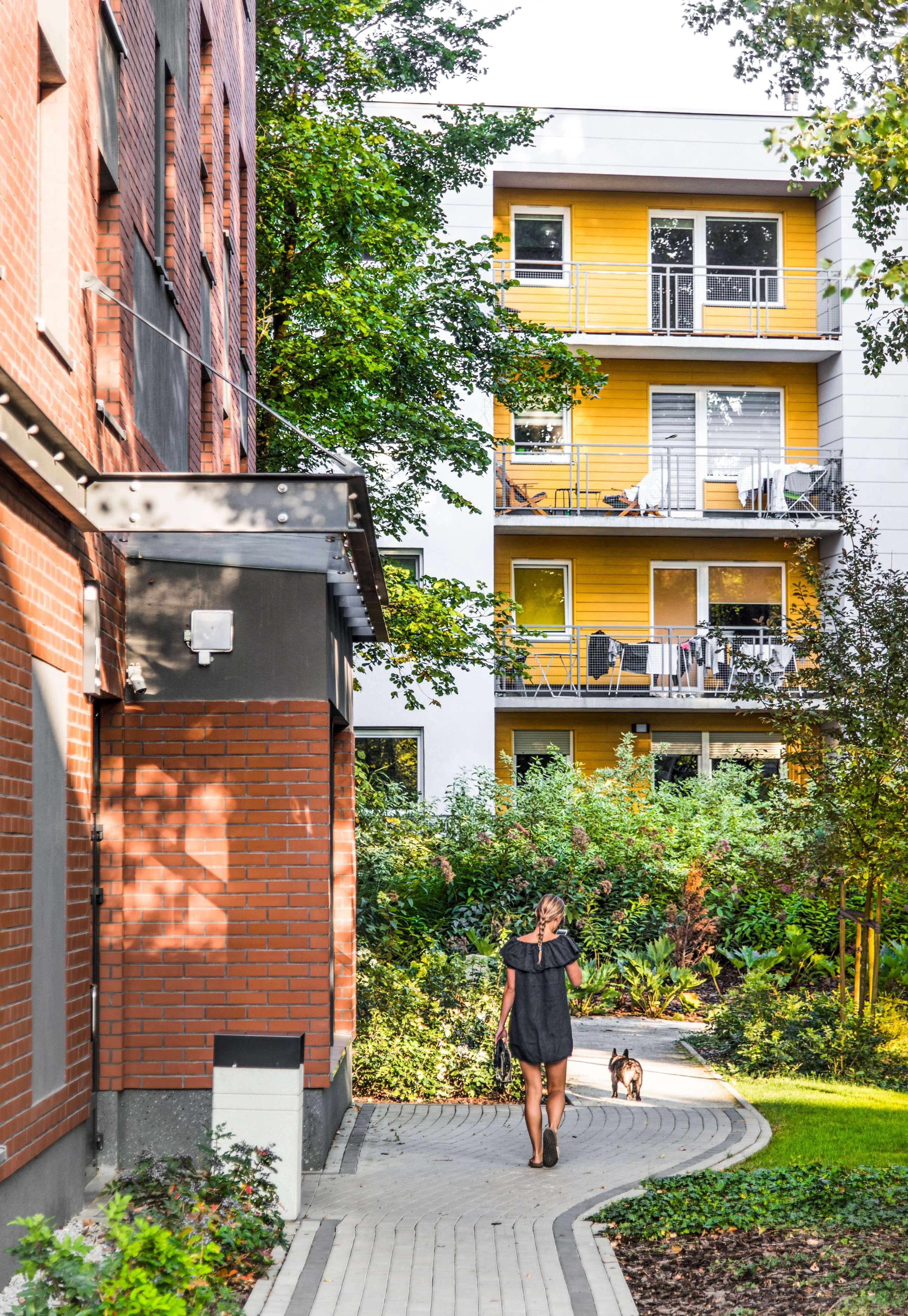
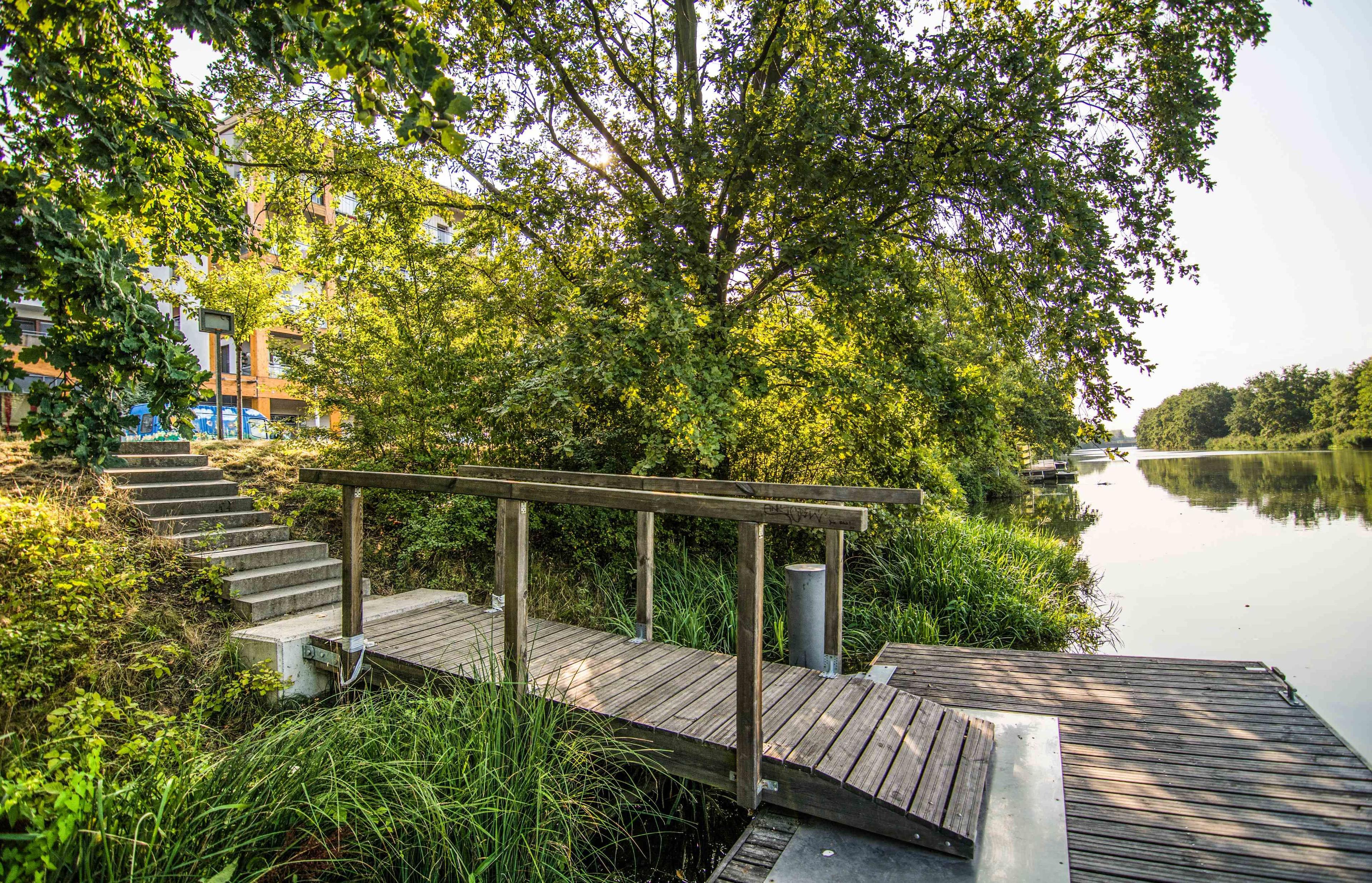
A representative boulevard was created along the canal, with piers and a marina, while inside the blocks green courtyards offer playgrounds and sports areas. The internal system of pedestrian and cycling paths connects with the citywide network. Every apartment is no more than 150 meters from a park. Journalists and urban planners have praised the harmony with which the project integrates new development with its surroundings. The estate was incorporated into the life of the city through the extension of riverside boulevards and the creation of publicly accessible spaces.
Flexible and adaptable apartment layout
A variety of apartment typologies allows residents to choose a space suited to their needs. The architects at SRDK STUDIO designed functional layouts that can be adapted to different life cycles. All apartments have logical, ergonomic layouts with practical circulation zones. There are no bay windows, awkward corners, or oversized or undersized areas. The apartments’ functionality is of the highest level.
Good view from every apartment
For prospective buyers, views are one of the key attributes of an apartment, next to daylight and a logical layout. At Olimpia Port every apartment benefits from attractive views: intimate greenery, squares, courtyards and waterfront. This was made possible thanks to the involvement of the SRDK STUDIO team in shaping the local spatial development plan.
Cultural and natural context
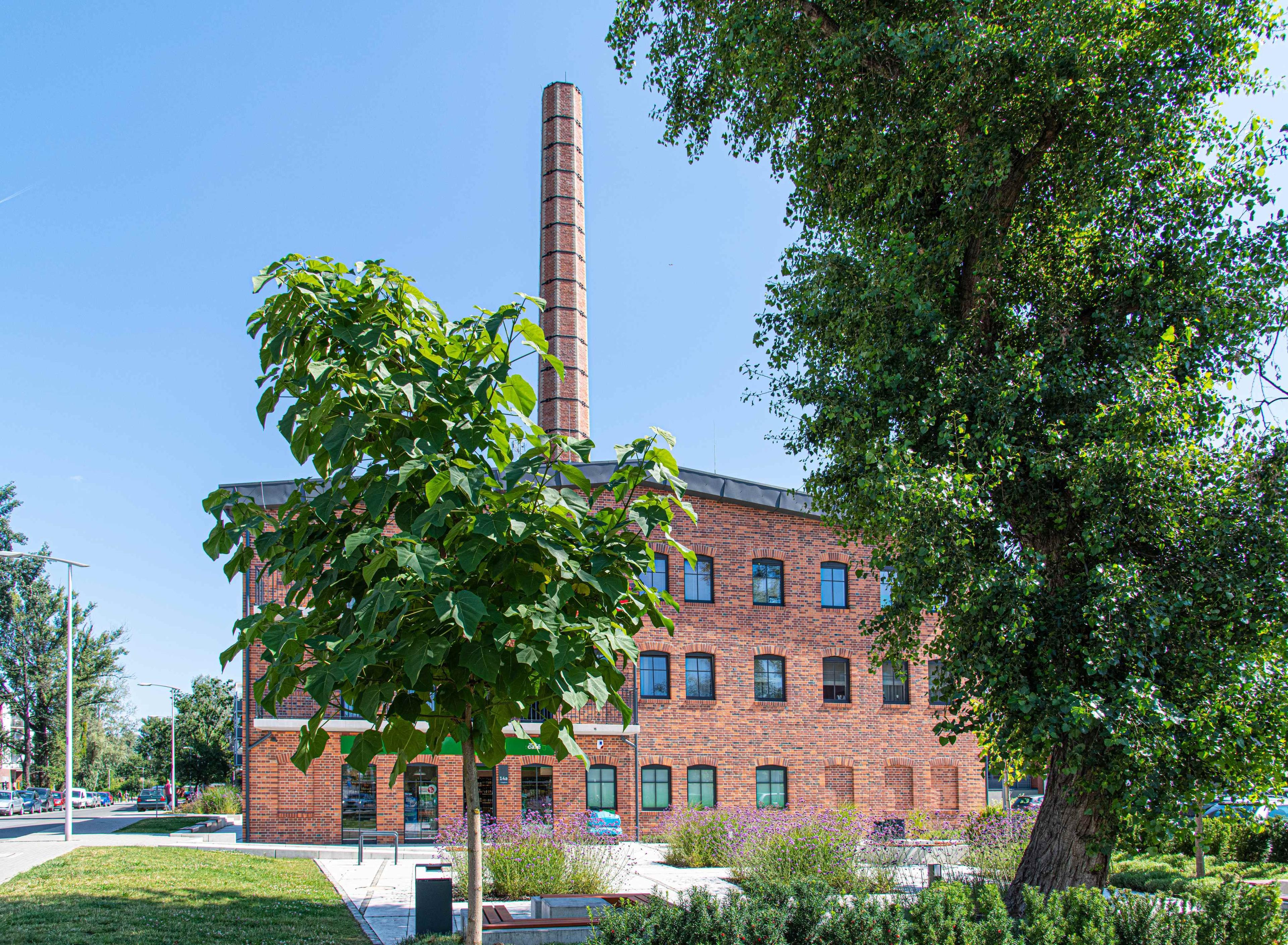
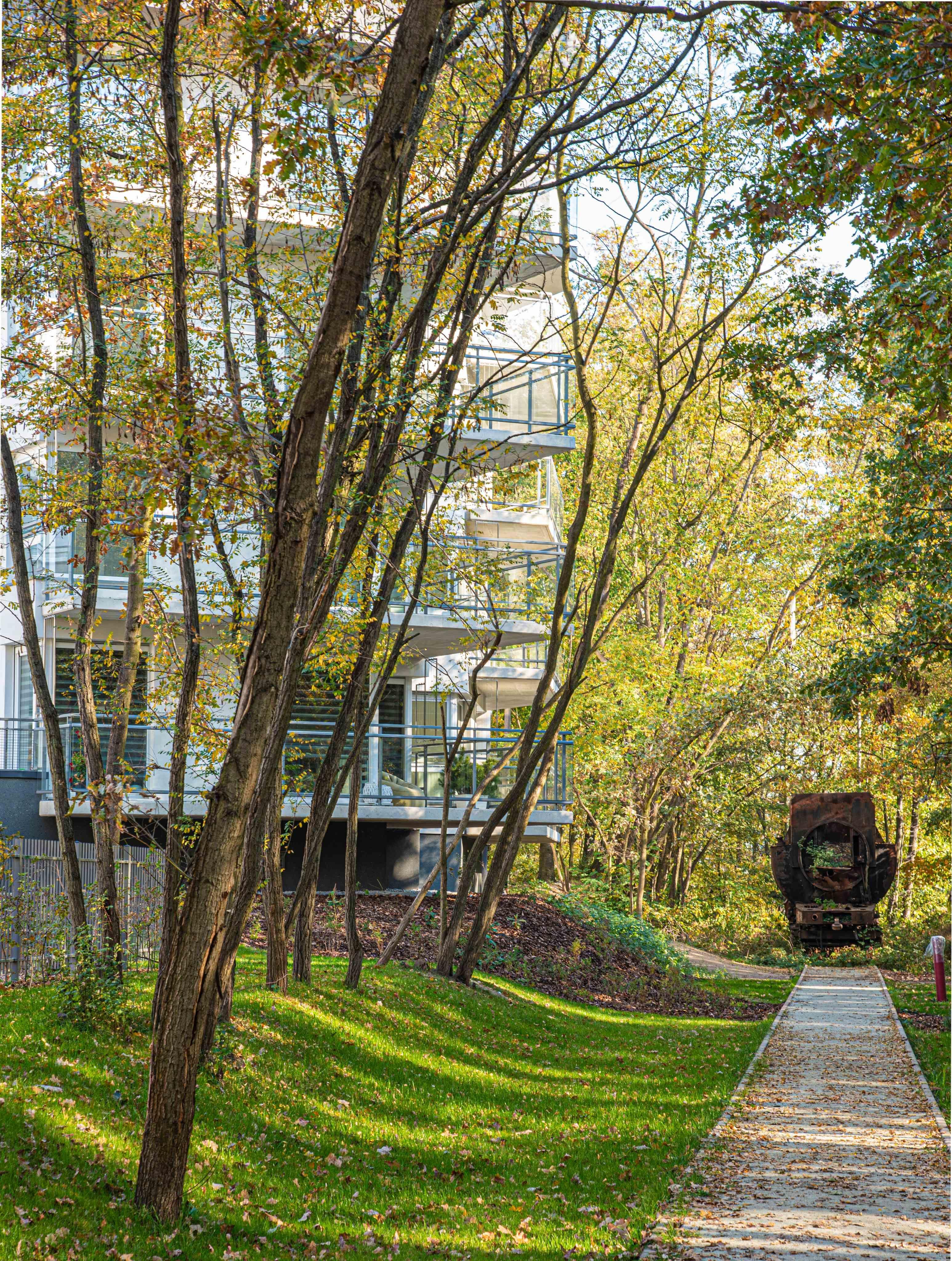
Olimpia Port was designed as a social estate that fosters community interaction. Historic post-industrial elements echo the new development. Old railway sidings have been turned into walking paths, and a railway tender has been displayed as part of the small-scale architecture.
Network of pedestrian and bicycle routes
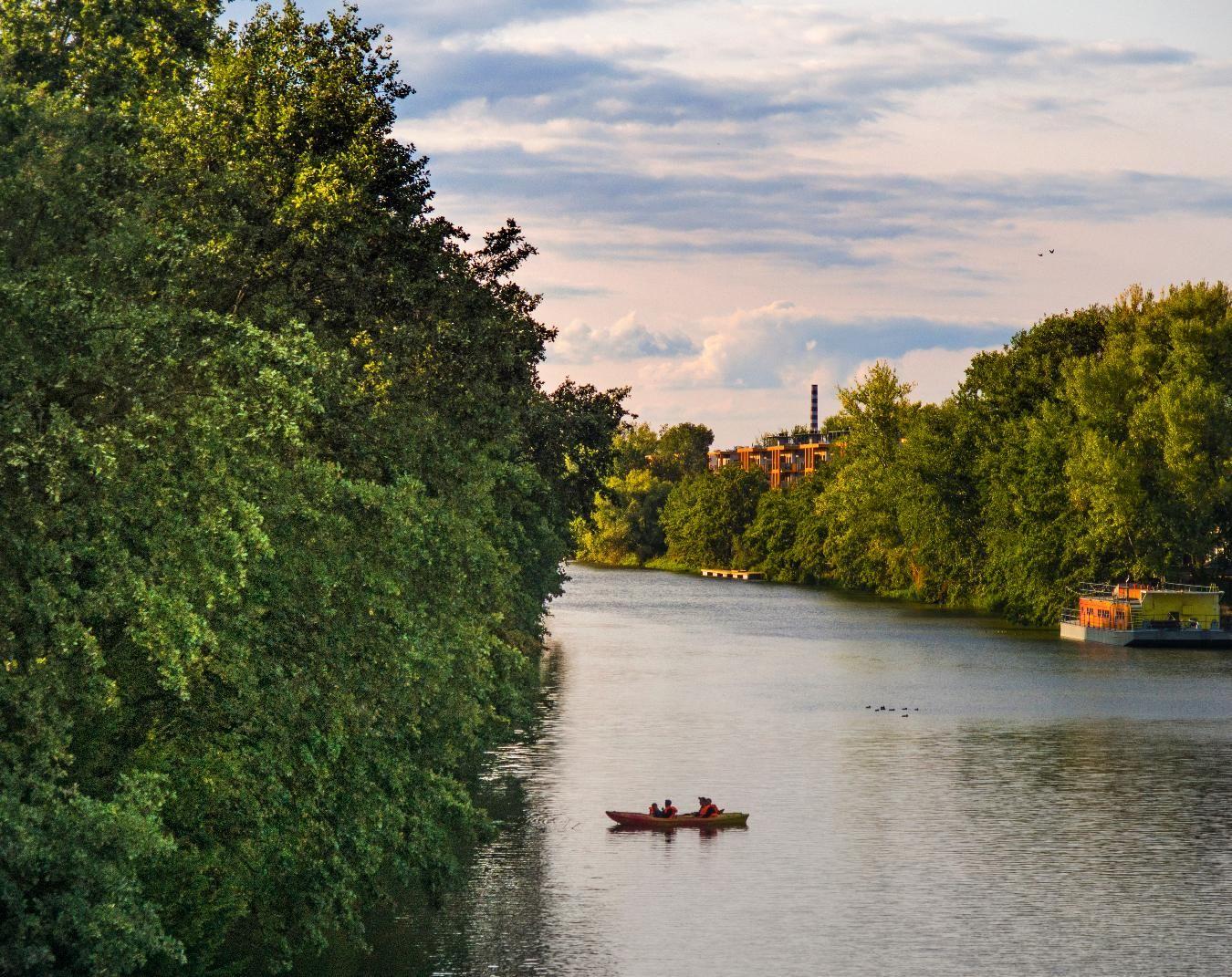
The entire estate opens towards the Odra through a sequence of riverside boulevards and green squares that make use of the area’s natural potential. The architects dedicated roughly six hectares of the site to green spaces, not including the waterfront itself, so that the distance from any apartment to a park or square doesn’t exceed 150 meters. This generous amount of greenery wraps around the estate, while all its parts are connected by pedestrian and cycling paths, forming a cohesive whole.
Low-rise architecture
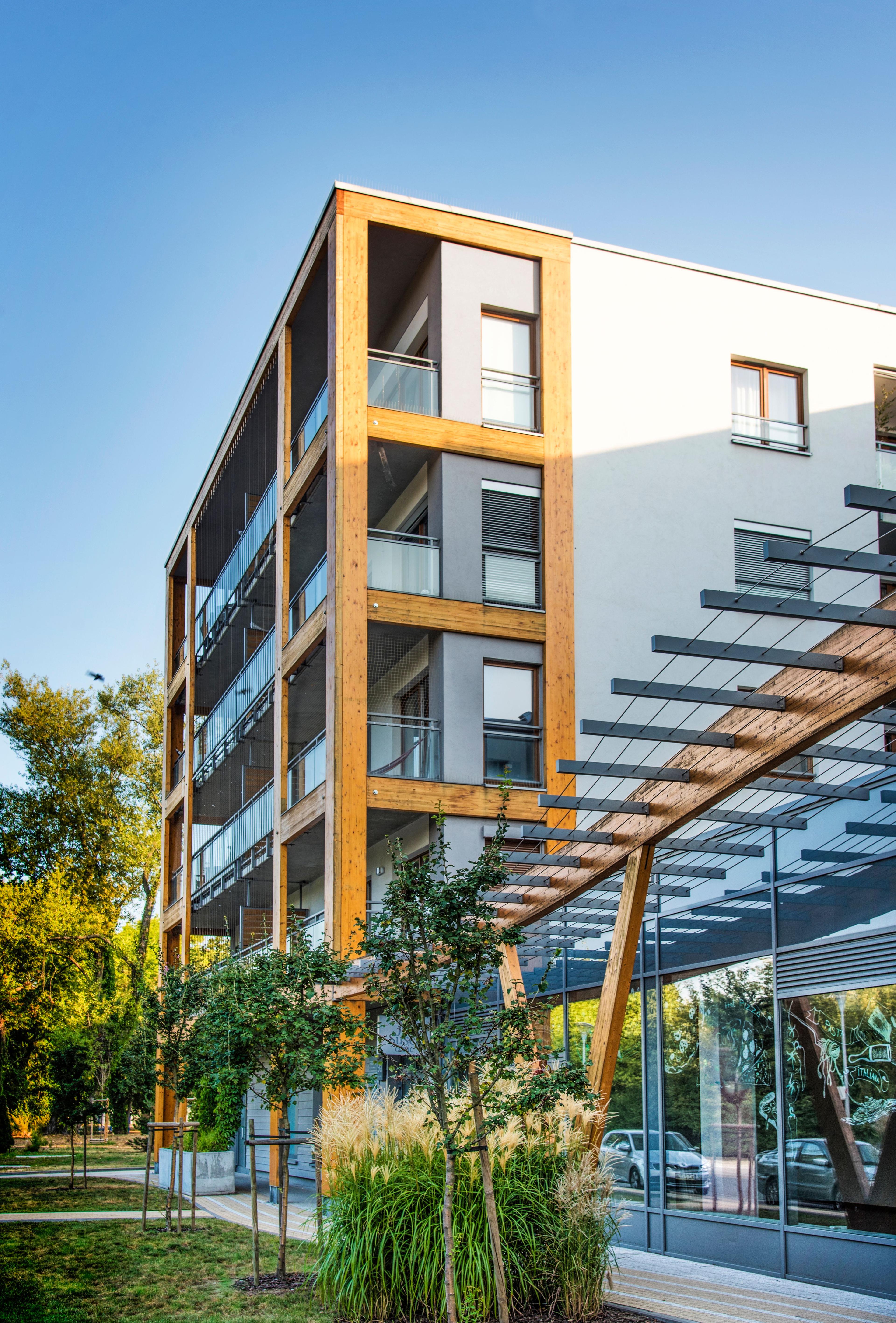
The buildings have a calm, contemporary aesthetic suited to their riverside context. Low-rise architecture with wooden façade accents and glass balcony balustrades creates a welcoming atmosphere close to the water. In the waterfront areas, large terraces, panoramic windows, and glazed apartment corners take full advantage of the waterfront location.
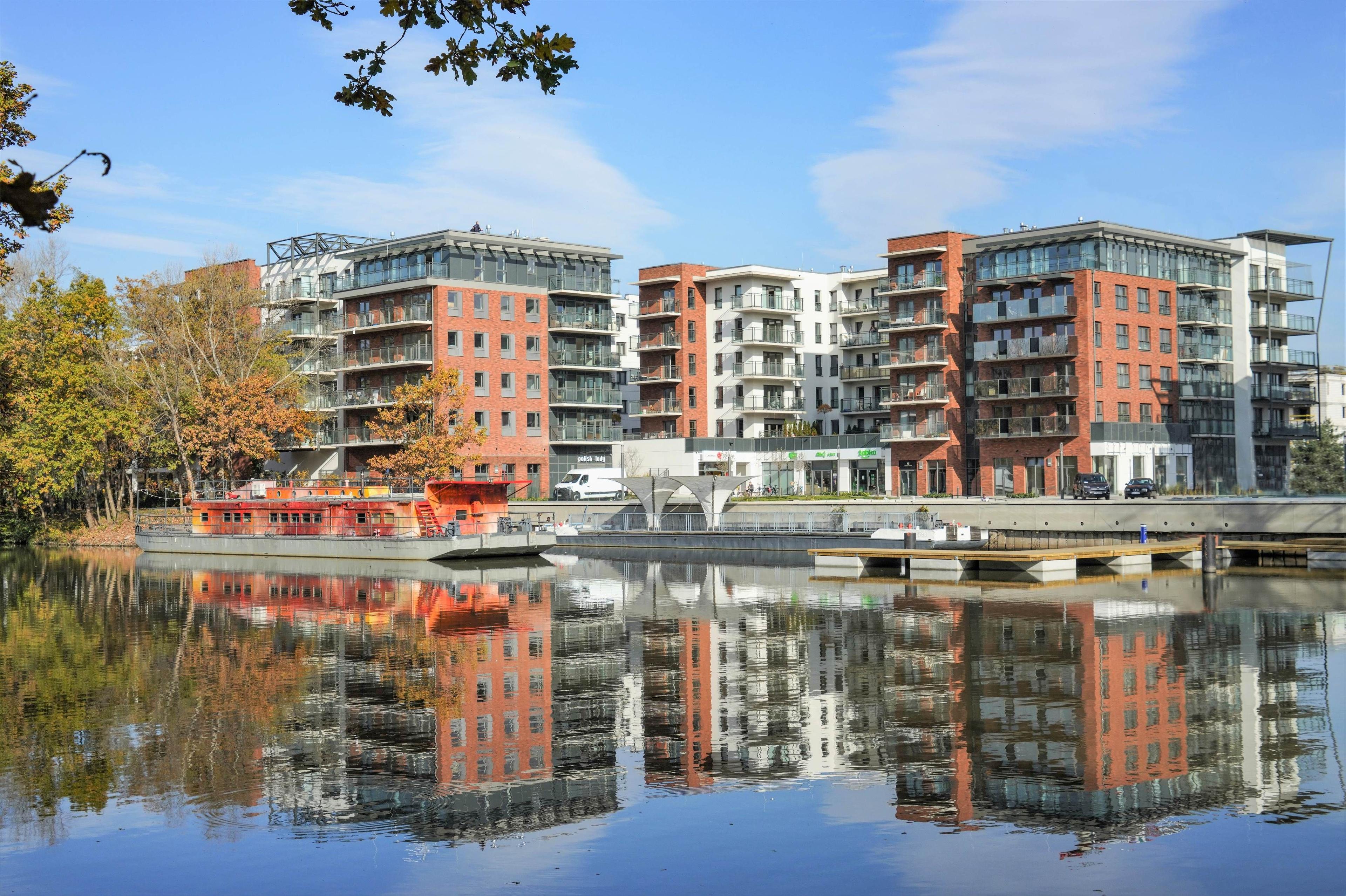
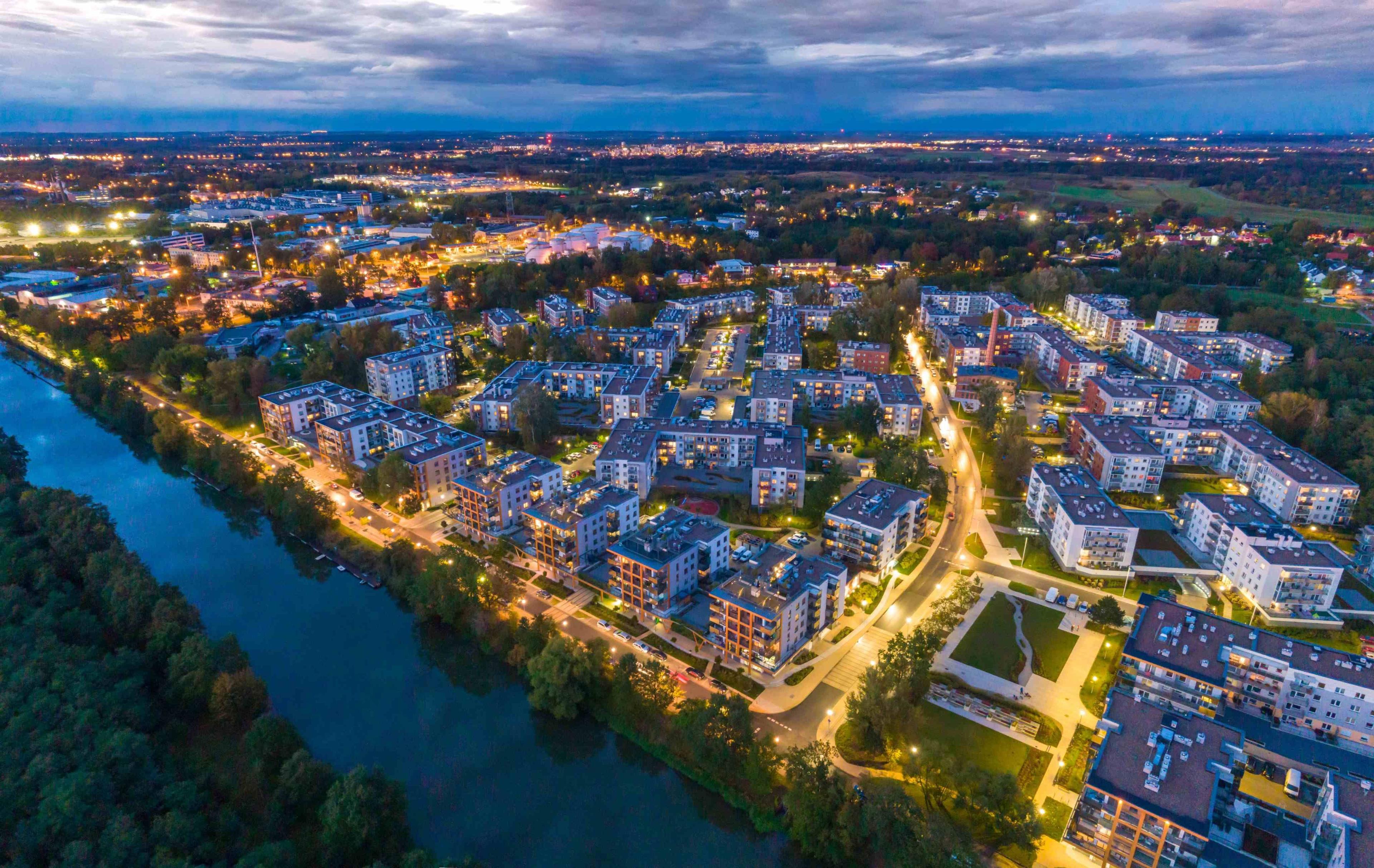
The former cargo port is now the thriving center of Olimpia Port neighborhood in Wrocław
Gallery
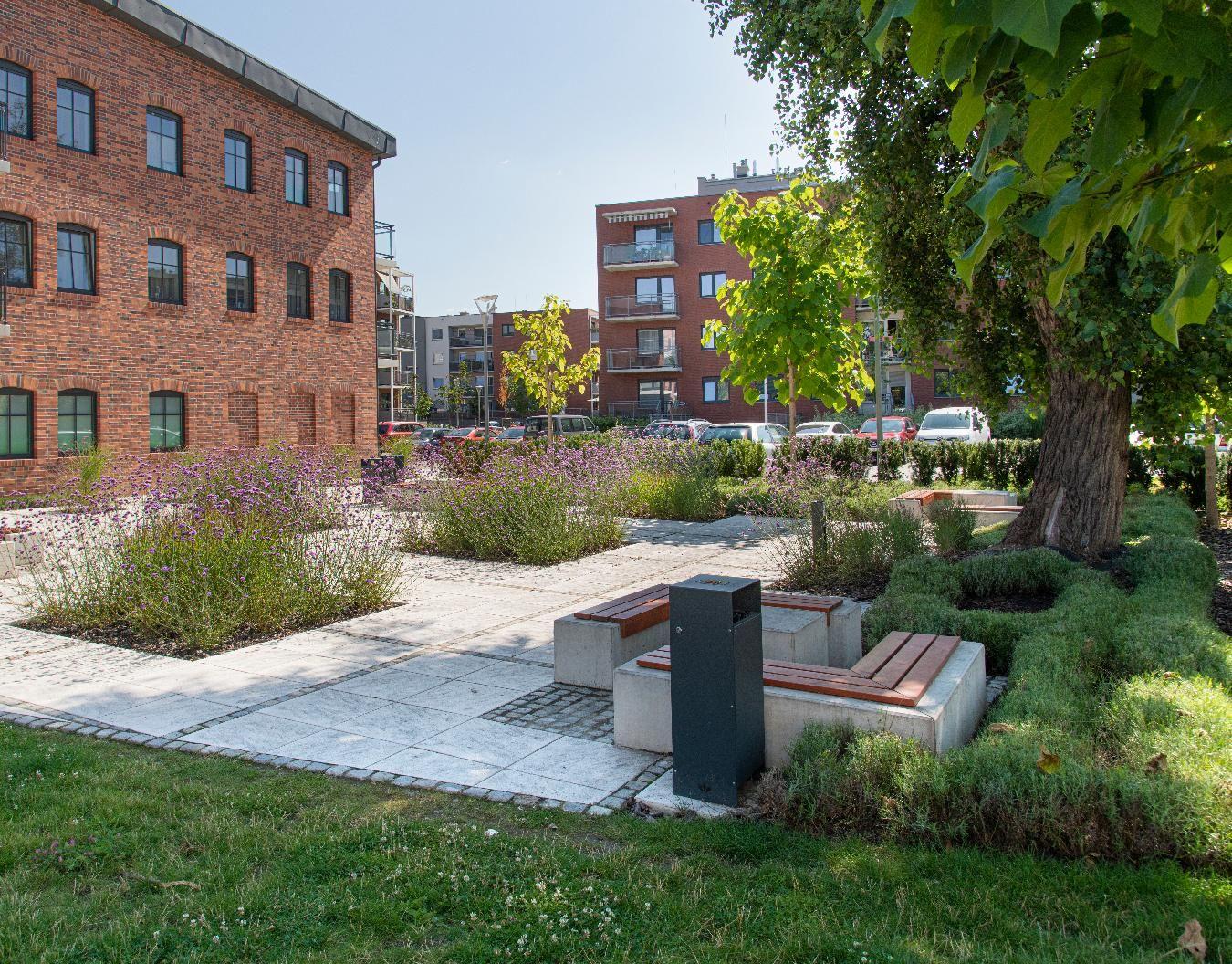
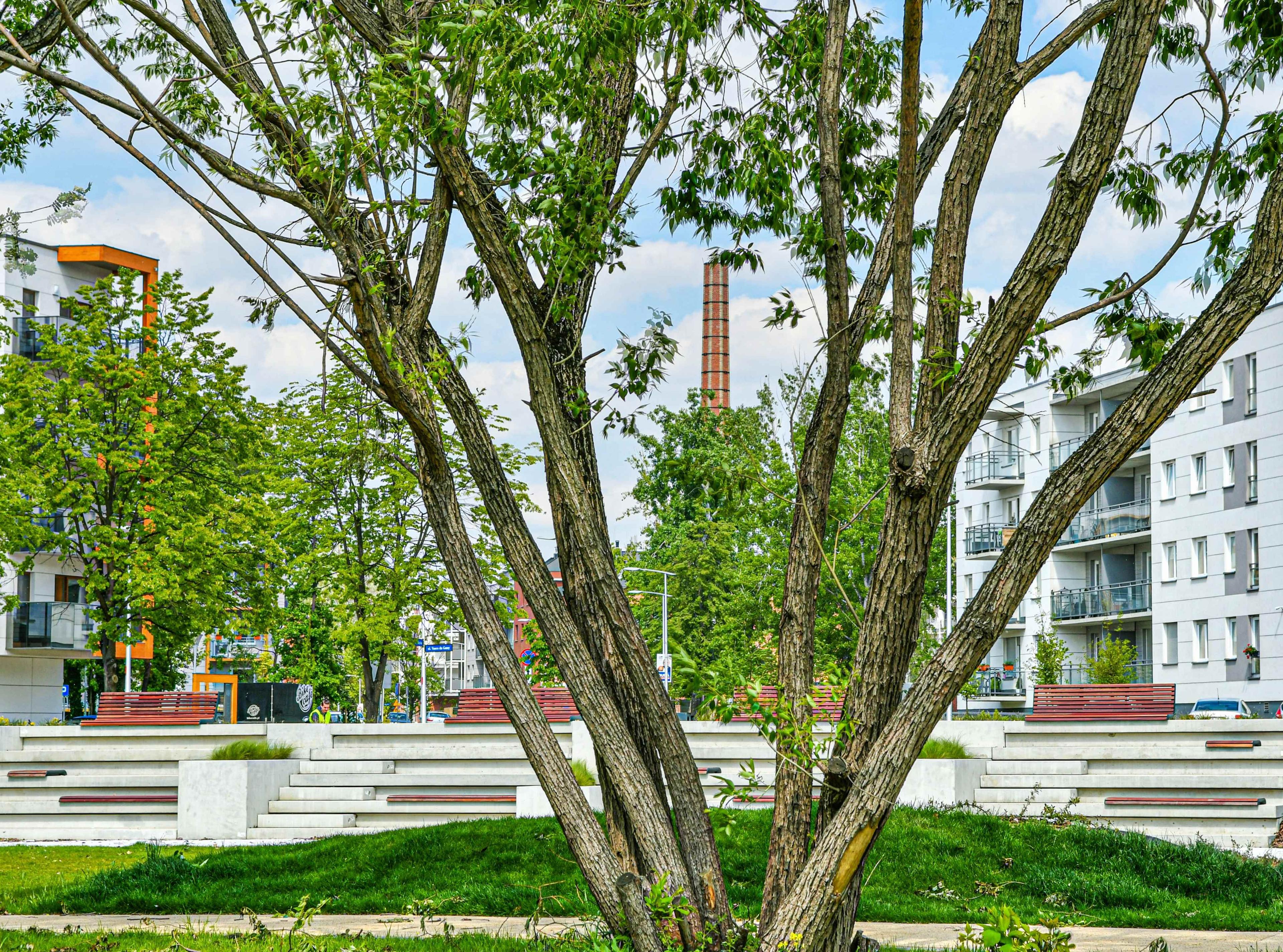
The preserved brick building became the design inspiration for neighboring facades
DESCRIPTION AND INNOVATIVE SOLUTIONS
Olimpia Port is the second largest multi-family housing estate in Poland and a model example of revitalizing degraded post-industrial areas. The project by SRDK STUDIO transforms a 35-hectare former industrial site in Wroclaw into a vibrant residential district.
The estate stands out for its carefully considered urban layout. The main axis, Magellana Street, was deliberately shifted twelve degrees from the north-south direction to ensure optimal sunlight in the residential blocks. To the east the development borders the Odra shipping canal, to the south recreational areas of the Great Island, the Swojczyce estate to the west, and to the north – a former railway embankment marks the boundary.
The architecture references the post-industrial identity of the site while introducing a contemporary aesthetic. Varied building heights of four to six-stories create an intimate urban character. Particular attention was paid to the relationship with water. A boulevard with service units was created along the canal, and the Odra became an integral element of the composition.
The project incorporates innovative water management solutions, including a system of dry rivers, retention tanks, and permeable surfaces. Green corridors within the estate connect to the city’s network of routes, creating cooling and ventilation paths, while adapted elements of the post-industrial landscape establish a unique identity for the place.
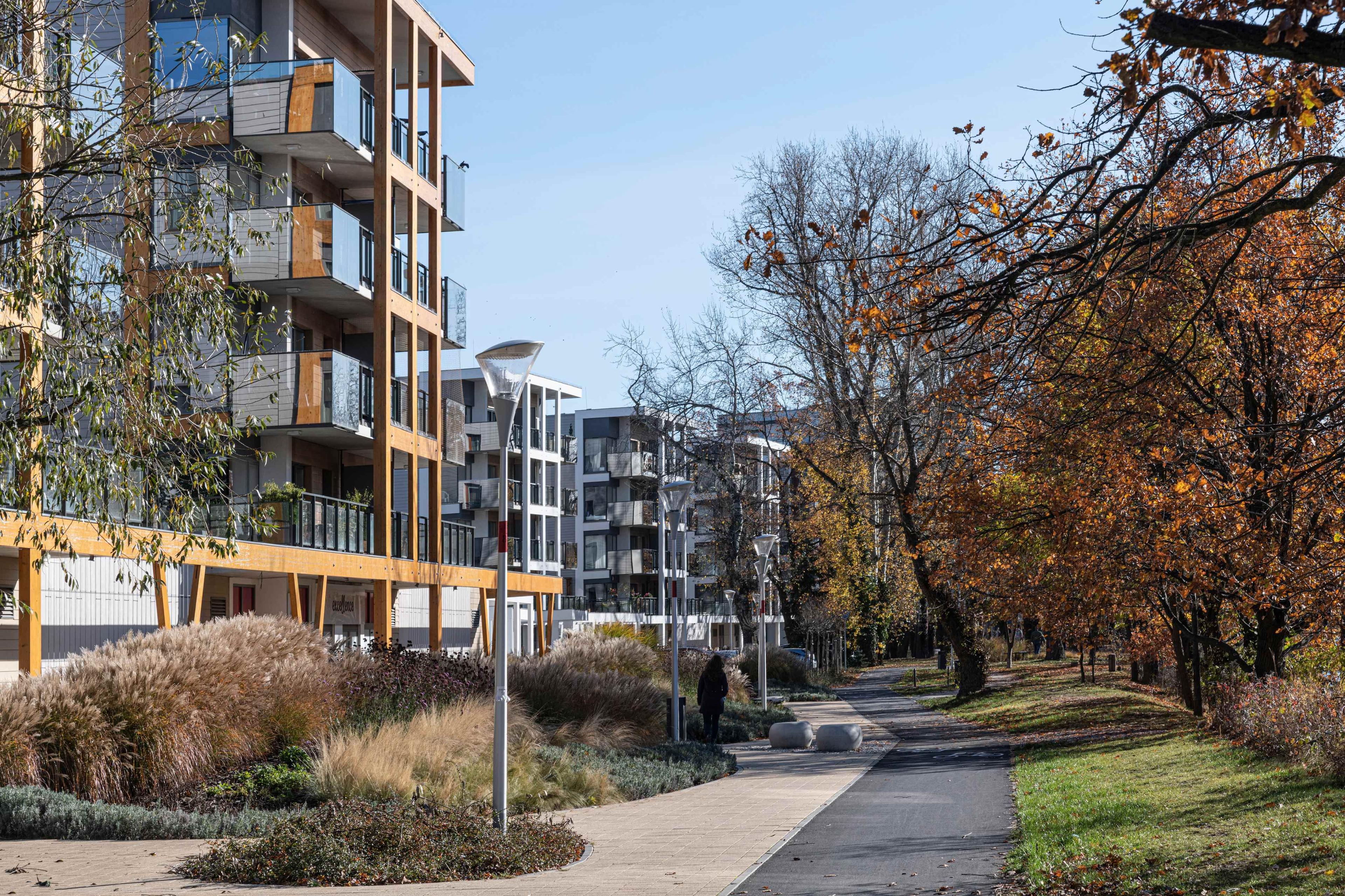
The thoughtful site design is a valued feature among residents Olimpia Port
Awards
Awards
Best Residential Investment in Wroclaw in the ”Multi-family buildings”
Best City-Integrated Development

PZITB Best Residential Project 2012–2015 in the “Development consistent with the principles of sustainable growth” category.

Best Residential Project 2012–2015 in the “Development consistent with the principles of sustainable growth” category.
Articles
Miasto 2077
"We prioritize green space over building density"
Go to articleProperty Design
Waterfront on Post-Industrial Land: SRDK STUDIO Architects Share the Story Behind Olimpia Port
Go to articleSztuka Krajobrazu
Revitalized waterfront – Olimpia Port Developmnt Wrocław
Go to articleForbes
Numerous misconceptions have emerged about the development industry.
Go to articleProperty Design
Archicom concludes its most ambitious project. Construction lasted 13 years.
Go to article
Investor

While we've completed many ambitious projects, we never lose sight of what matters most-the residents and users of our buildings
Share
Related project
Discover inspiration in our projects!
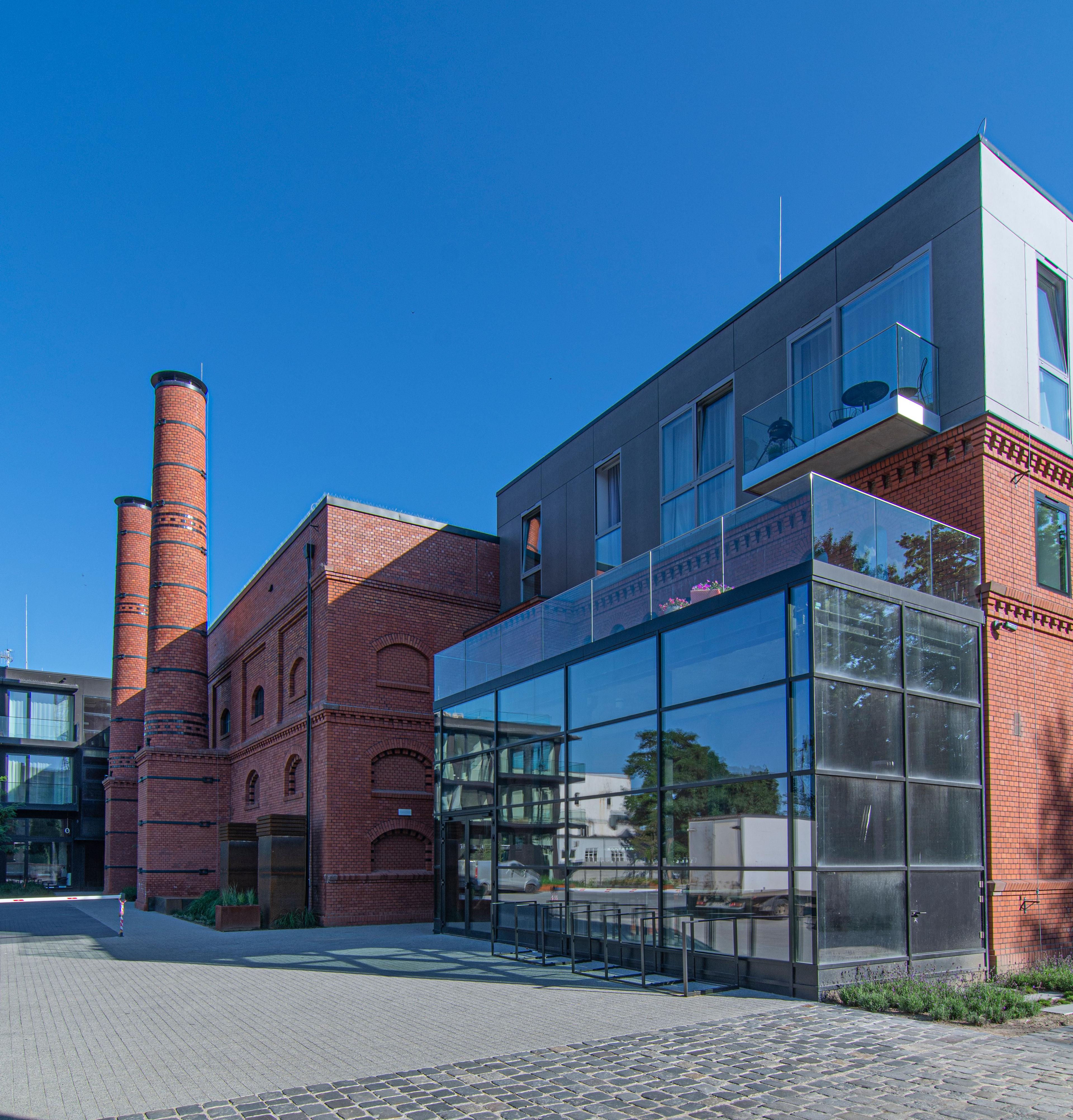
Piekarnia Art Center
Site area
0,52 ha
Gross floor area
3 225 m²
Net usable area:
2 344 m²
Number of residential and commercial units
20
Number of above-ground floors
I-III
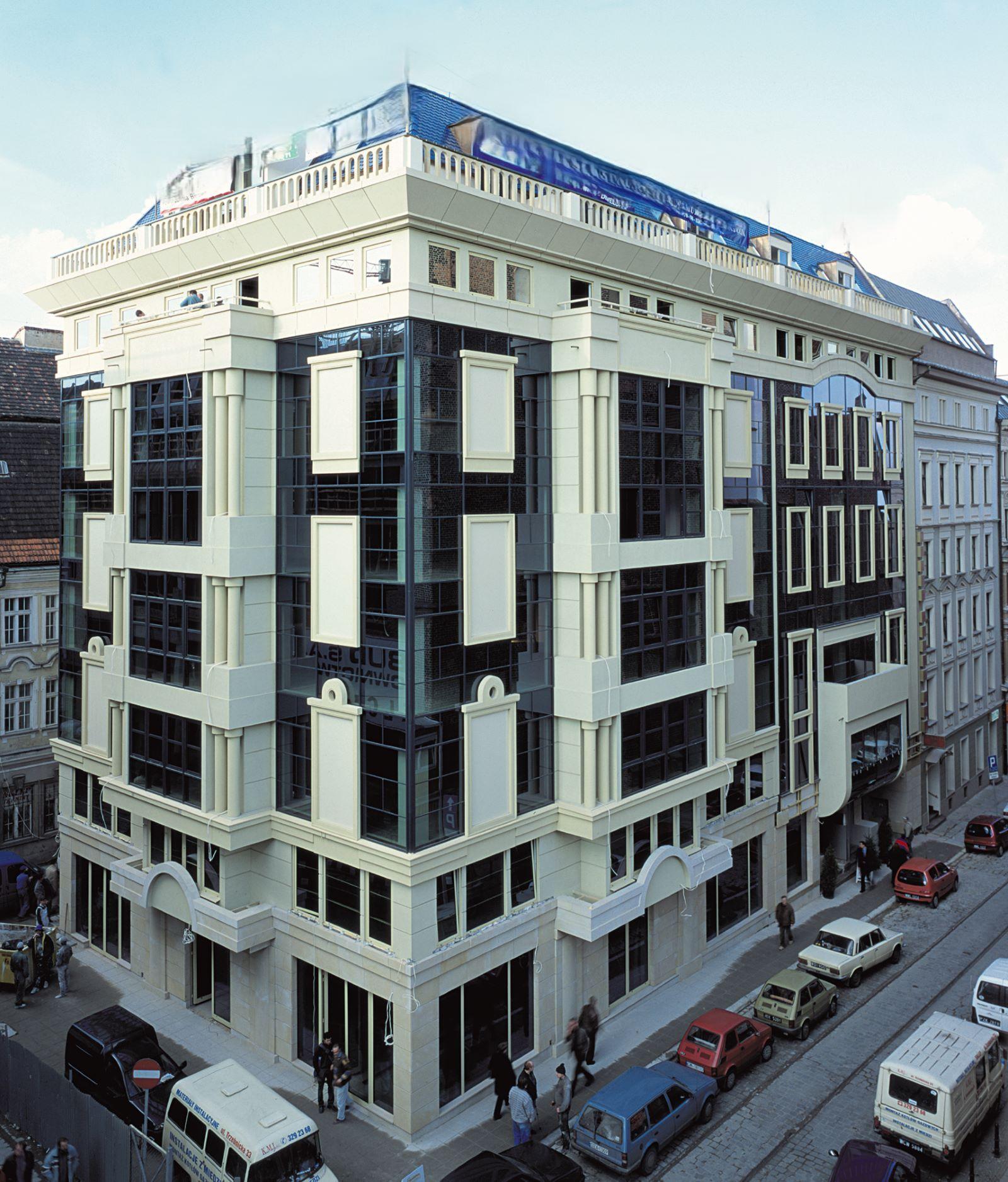
RBC
Site area
0,08 ha
gross floor area
5 422 m2
area per floor
550 m2
office GLA
4 387 m2
number of storeys above ground
VIII
Olimpia Port is quality urbanism done right
Urbanization as an opportunity to improve quality of life -the example of Olimpia Port, an SRDK STUDIO project
Urbanization, particularly in highly developed countries, is today a complex phenomenon encompassing both urban population growth and the adoption of urban characteristics by rural areas. Thoughtful spatial, demographic, and economic urbanization can result in a significant increase in living standards, access to basic consumer goods, and infrastructure development. The global population continues to rise, driving rapid urban growth and intensifying the need for sustainable urban planning. Olimpia Port in Wrocław, designed by SRDK Studio, exemplifies how modern, sustainable mixed-use neighborhoods can be created in response to intensive rural-to-urban migration and changes in urban population. In this instance, the buildings within Olimpia Port support diverse functions—residential, commercial, and community spaces—promoting sustainability, resilience, and urban vitality. The development was built on the site of a former river port, and its location and opening to the Oder River, along with the urban green network, represent an exemplary combination of spatial urban development with environmental protection. Preserving open space in such projects is crucial for ecological and recreational benefits, helping to fight urban sprawl and providing important outlets within the city.
Olimpia Port is a model example of post-industrial site revitalization
Effects of Urbanization and Spatial Urban Development
The effects of urbanization are diverse and can be both positive and negative. Positive effects of urbanization include increased technical innovation, better healthcare, and higher education levels. Urban populations tend to have higher living standards compared to rural populations. Cities become centers of technological and cultural progress, attracting investment and fostering economic development. Mixed-use developments can provide significant employment and housing opportunities, increase housing variety, density, and affordability through a focus on multifamily housing, and support local economies by encouraging spending at nearby businesses. On the other hand, urbanization can lead to decreased biodiversity, increased air pollution, and a fast-paced lifestyle that negatively impacts residents’ health and quality of life. Cities account for more than 70% of global energy-related CO2 emissions and an estimated 50% of global waste. It is important to manage the urbanization process sustainably to minimize negative effects and maximize benefits. The Olimpia Port masterplan by SRDK STUDIO embodies these principles — delivering a balanced, human-scale neighborhood that turns former industrial land into a thriving waterfront community in Wrocław.
What is Urbanization?
Urbanization is the process of population concentration in points of geographic space, primarily in urban areas. This means an increase in urban population and its share in the total population of a given area. Urbanization occurs on several levels: socio-cultural, demographic, and economic. In practice, this means that more and more people are moving to cities in search of better living conditions, work, and access to services. This process leads to dynamic urban development, with cities becoming centers of innovation, culture, and economy. The world's population is increasingly urban, and the UN estimates that by 2050, more than two-thirds of the world will live in urban areas. Urbanization has largely been confined to the past 200 years, and the migration of populations from rural to urban areas has been a significant trend in recent decades.
Causes of urbanization and urban population growth
The causes of urbanization are diverse and depend on the country, region, and era. In highly developed countries, the main cause of urbanization is intensive rural-to-urban migration in search of work and better living conditions. Cities offer better employment opportunities, higher living standards, and access to advanced infrastructure. In underdeveloped countries, urbanization is often the result of rural overcrowding, where basic consumer goods are lacking and environmental degradation of rural areas forces people to migrate to cities. In both cases, urbanization is a response to the need to improve quality of life and access to resources. The share of the urban population living in slum households is just under 1-in-4, highlighting the challenges of rapid urban growth.
Types of urbanization
Urbanization is a multidimensional process that can be divided into several types depending on the level at which it occurs. Each of these types has unique characteristics and impacts urban development differently.
Demographic urbanization involves the migration of population from rural settlements to cities. This is the most common type of urbanization, leading to urban population growth and decreased rural population. Human settlements evolve as people move to urban areas, changing land use patterns and increasing urban density. An example might be young people migrating to large cities in search of better educational and career opportunities.
Spatial urbanization concerns the expansion of urban areas, increasing their capacity, and the emergence of new cities. The built up area refers to the extent of urbanized land within cities, towns, and villages, and is a key measure of human infrastructure and urbanization levels. This is a process in which cities expand, occupying increasingly larger areas, often leading to the transformation of rural areas into urban ones. Metropolitan areas, which encompass central cities and their surrounding suburbs, present unique planning challenges due to their size and complexity. Examples include suburban development and the creation of new residential districts.
Economic urbanization involves an increase in the population working in non-agricultural occupations. Various economic sectors develop in cities, such as industry, services, and commerce, attracting rural populations to cities in search of work. As a result, cities become economic centers, and urban populations gain access to better living conditions.
Social urbanization is expressed in newcomers from rural areas adopting an urban lifestyle. This means that rural populations, moving to cities, adapt to urban norms and values, which influences changes in their lifestyle. Examples include changes in consumer habits, dress styles, or ways of spending leisure time.
Urbanization rate
The urbanization rate is a measure that determines the share of urban population in the total number of inhabitants of a given area. This is an important indicator that allows assessment of the degree of urbanization in different regions and countries.
The urbanization rate can be calculated for various administrative units, such as country, province, or county. Based on this indicator, countries can be divided into three groups: highly industrialized, developing, and developed. In highly developed countries, the urbanization rate is typically high, indicating a large share of urban population in the total number of inhabitants.
In Poland, the urbanization rate is approximately 59.6%, meaning that more than half of the country’s population lives in cities. The highest urbanization rate is observed in Lower Silesian Voivodeship, where it is around 76%, while the lowest is in Subcarpathian Voivodeship at around 40%. Generally, urbanization in Poland has been declining for several years—there is a reverse trend caused by, among other things, difficulties of city living and associated costs.
The highest urbanization rates are observed in highly developed countries such as Belgium (96%), the United Kingdom (90%), and the Netherlands (89%). In these countries, most of the population lives in cities, which is the result of a long-term urbanization process and economic development.
The urbanization rate is a key indicator that helps understand the dynamics of urban development and its impact on residents’ quality of life. Analysis of this indicator aids in urban policy planning and decision-making regarding urban infrastructure development.
Conclusions - urban environmental degradation
Urbanization is a complex and multidimensional process with many causes and effects depending on country, region, and era. Understanding these processes is crucial for taking effective action to manage urbanization and improve the quality of life for urban agglomeration residents. The example of Olimpia Port in Wrocław demonstrates how thoughtful urbanization can lead to the creation of modern, sustainable urban spaces that respond to contemporary residents’ needs and contribute to better living and respect for values such as access to green spaces. Sustainable urban development should promote interconnected green space and a multi-modal transportation system, encouraging walking, bicycling, and other mobility options throughout the urban mixed-use core and neighborhoods. Urban development should utilize existing infrastructure to relieve pressure to develop at the urban fringe, and preserving open green spaces in cities is crucial to fighting sprawl because these spaces provide important outlets within the city. Sustainable urban development means responsible growth and development strategies that are broader in vision and more regional in scale.
Olimpia Port is a model example of post-industrial site revitalization, transformed into a modern, multifunctional urban neighborhood. The project features high finishing standards, rich public infrastructure, and common spaces supporting local community integration. The neighborhood embodies the “15-minute city” concept, where access to education, culture, services, and recreational areas doesn’t require car use. This addresses challenges posed by population growth and urbanization rates. New sustainable urban developments should provide a variety of commercial, institutional, educational uses as well as housing styles, sizes, and prices. Diverse public and private partnerships should be used to create sustainable and livable communities that protect historic, cultural, and environmental resources. Policymakers, including governments and local governments, should support sustainable site planning and construction techniques that reduce pollution. The OECD supports evidence-based policymaking that will drive the zero-carbon transition and secure sustainable and resilient cities. Olimpia Port is also a response to the negative effects of overcrowded rural areas and environmental degradation—offering a new quality of urban life supported by increased technical innovation and business development.
SRDK Studio’s project demonstrates full understanding of the socio-cultural causes of urbanization and contemporary residents’ needs—both in terms of lifestyle and aspirations to live in well-designed, sustainable urban spaces.
Introduction: urbanization as a catalyst for change
Urbanization is rapidly transforming the global landscape, acting as a powerful catalyst for economic growth, innovation, and sustainable development. As the world’s population continues to rise, projections indicate that over two-thirds of people will reside in urban areas by 2050. This unprecedented shift is positioning cities at the forefront of economic development, making them hubs for commerce, culture, and technological advancement. Recognizing this trend, the European Union has prioritized sustainable urban development, encouraging the creation of mixed use development projects that seamlessly blend residential, commercial, and recreational spaces. These initiatives are not only reshaping urban areas but are also fostering resilient cities that can adapt to the challenges of population growth and climate change. In this context, urbanization is more than just a demographic trend—it is a unique opportunity to create vibrant, sustainable cities that improve quality of life and drive economic progress for communities across the globe.
The vision behind Olimpia Port
Olimpia Port stands as a benchmark for sustainable urban development, showcasing how mixed use development can transform a former industrial site into a thriving, modern community. The project’s vision centers on creating a harmonious blend of residential spaces, green spaces, and commercial amenities, all within easy reach for residents. By integrating multiple functions within a single building or neighborhood, Olimpia Port fosters social inclusion and encourages a sense of community, while also reducing carbon emissions through smart urban planning and efficient land use. The development’s commitment to sustainability aligns with the objectives of the Environmental Protection Agency and the European Commission, both of which advocate for reducing greenhouse gas emissions and promoting environmentally responsible urban development. Olimpia Port’s design ensures that residents enjoy easy access to essential services, recreational areas, and public transportation, setting a new standard for urban living that prioritizes both environmental stewardship and quality of life.
Rethinking urban quality of life
The definition of urban quality of life is evolving, driven by the growing popularity of mixed use spaces and their proven benefits for sustainable urban development. Mixed use projects, such as those pioneered in cities like San Francisco, demonstrate how integrating residential, commercial, and recreational areas can significantly enhance the urban experience. These developments offer a range of advantages, including shorter commutes, increased opportunities for social interaction, and convenient access to a variety of services and amenities. By fostering vibrant, walkable communities, mixed use development supports economic growth, social inclusion, and environmental sustainability. Research published in the International Journal of Sustainable Development underscores the significant impact of mixed use projects on the built environment, highlighting global examples where such initiatives have improved residents’ well-being and contributed to more dynamic, resilient cities. As urban areas continue to grow, rethinking quality of life through the lens of mixed use development is essential for creating sustainable, thriving communities.
Integrating Mixed-Use spaces for vibrant communities
The integration of mixed use spaces is a cornerstone of sustainable urban development, playing a key role in creating vibrant and resilient communities. By thoughtfully combining residential units, commercial areas, and green spaces, cities can encourage social interaction, reduce urban sprawl, and elevate the overall quality of life for their inhabitants. Many metropolitan areas are revitalizing their city centers with high-density mixed use projects that prioritize walkability, access to grocery stores, and a diverse range of amenities. The European Commission’s commitment to sustainable urban development has inspired the creation of mixed use neighborhoods that seamlessly blend residential areas with commercial and recreational spaces, delivering significant economic and social benefits to local communities. These integrated developments not only support economic activity but also foster a sense of belonging and community, making cities more attractive and sustainable for current and future generations.
Green infrastructure and urban planning
Green infrastructure is increasingly recognized as a vital element of urban planning, especially in the pursuit of sustainable urban development. By weaving green spaces, parks, and gardens into the fabric of urban areas, cities can mitigate the urban heat island effect, enhance air quality, and support biodiversity. The Department of Housing and Urban Development has highlighted the importance of green infrastructure for promoting environmental sustainability, public health, and economic development. Research from the University of California further demonstrates that green infrastructure can reduce stormwater runoff, improve water quality, and bolster the resilience of urban environments. As the world’s population continues to concentrate in cities, the integration of green infrastructure into urban planning will be essential for fostering innovation, supporting sustainable growth, and ensuring that urban centers remain healthy, livable, and resilient in the face of future challenges.