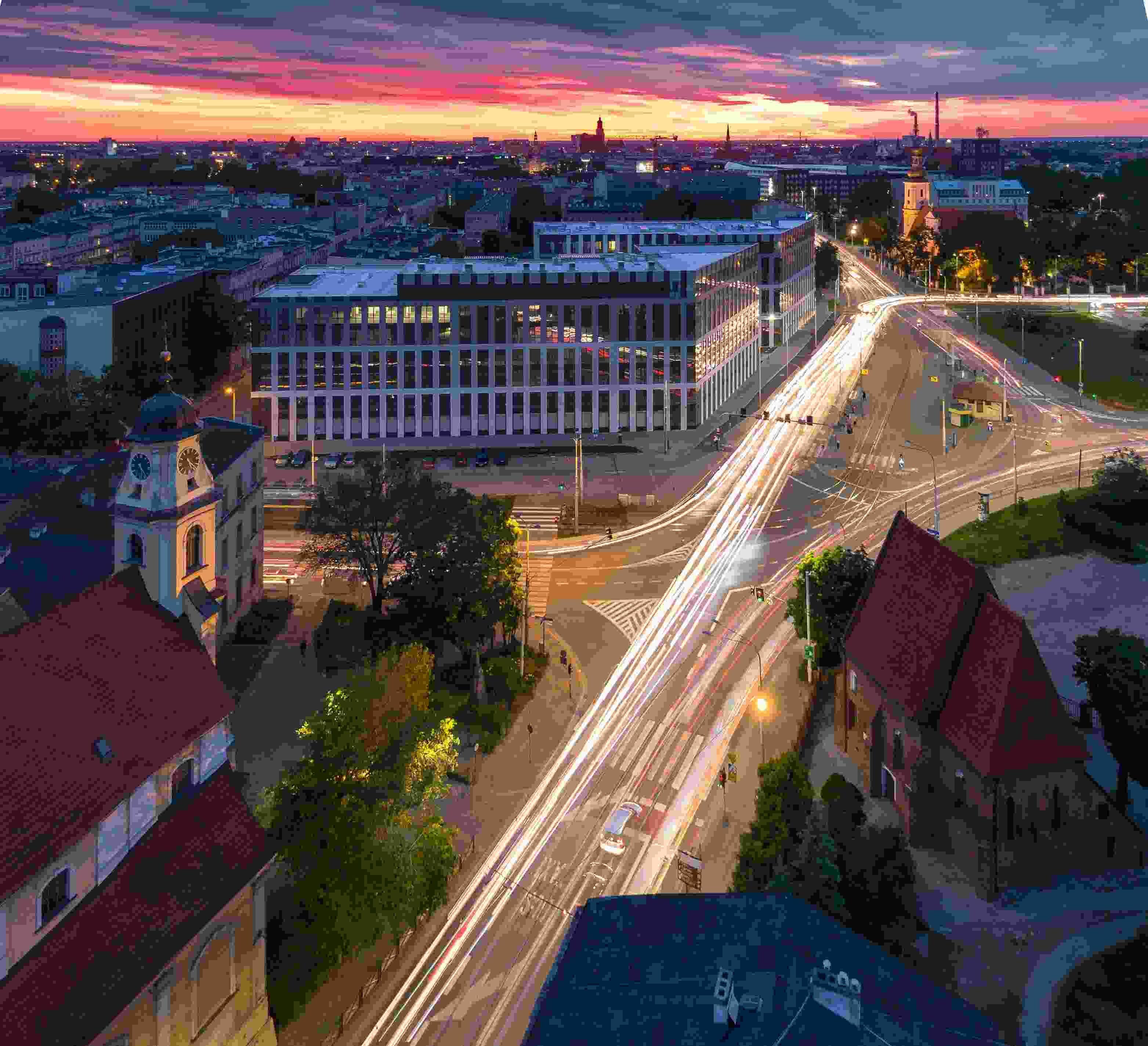
2017-2021
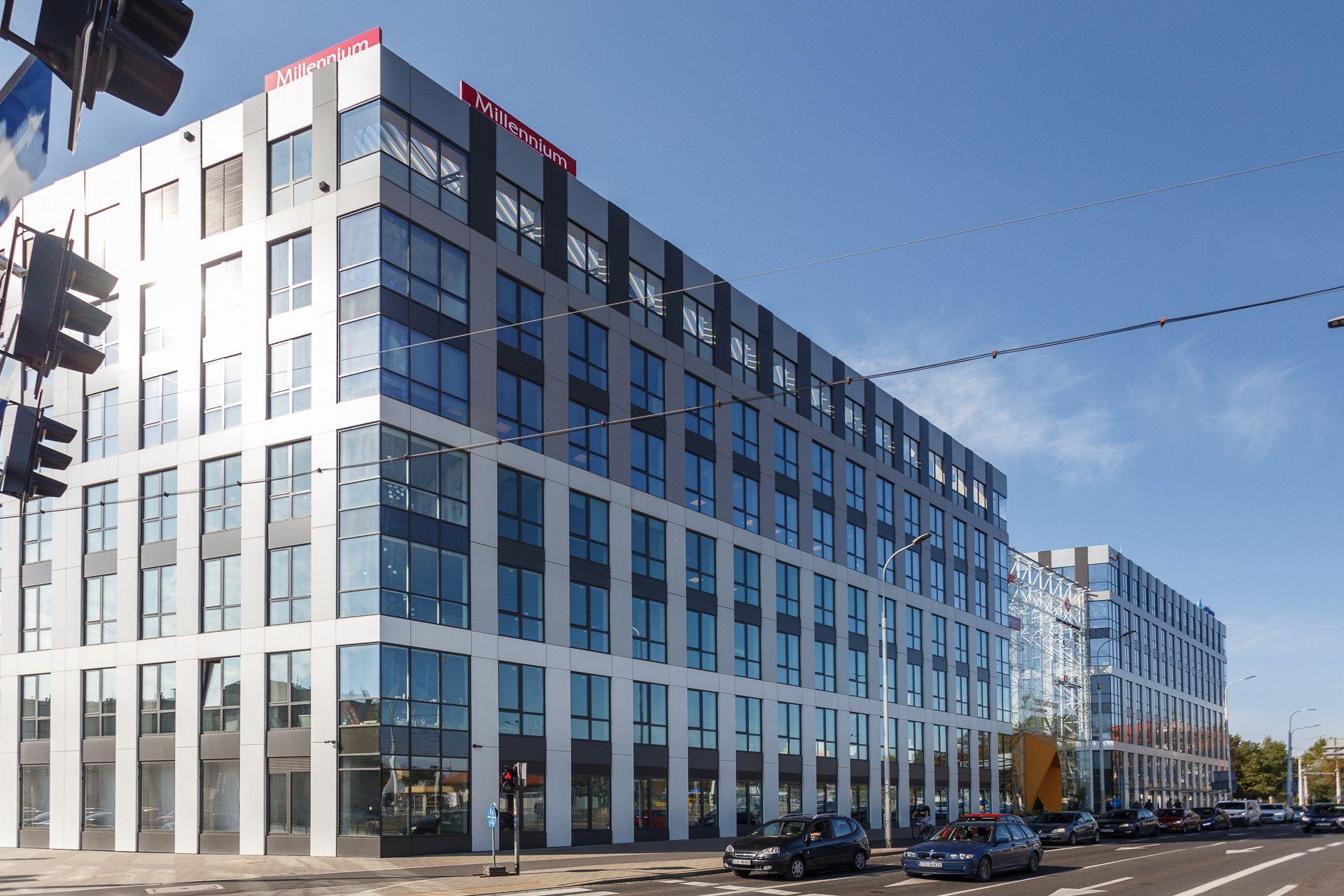
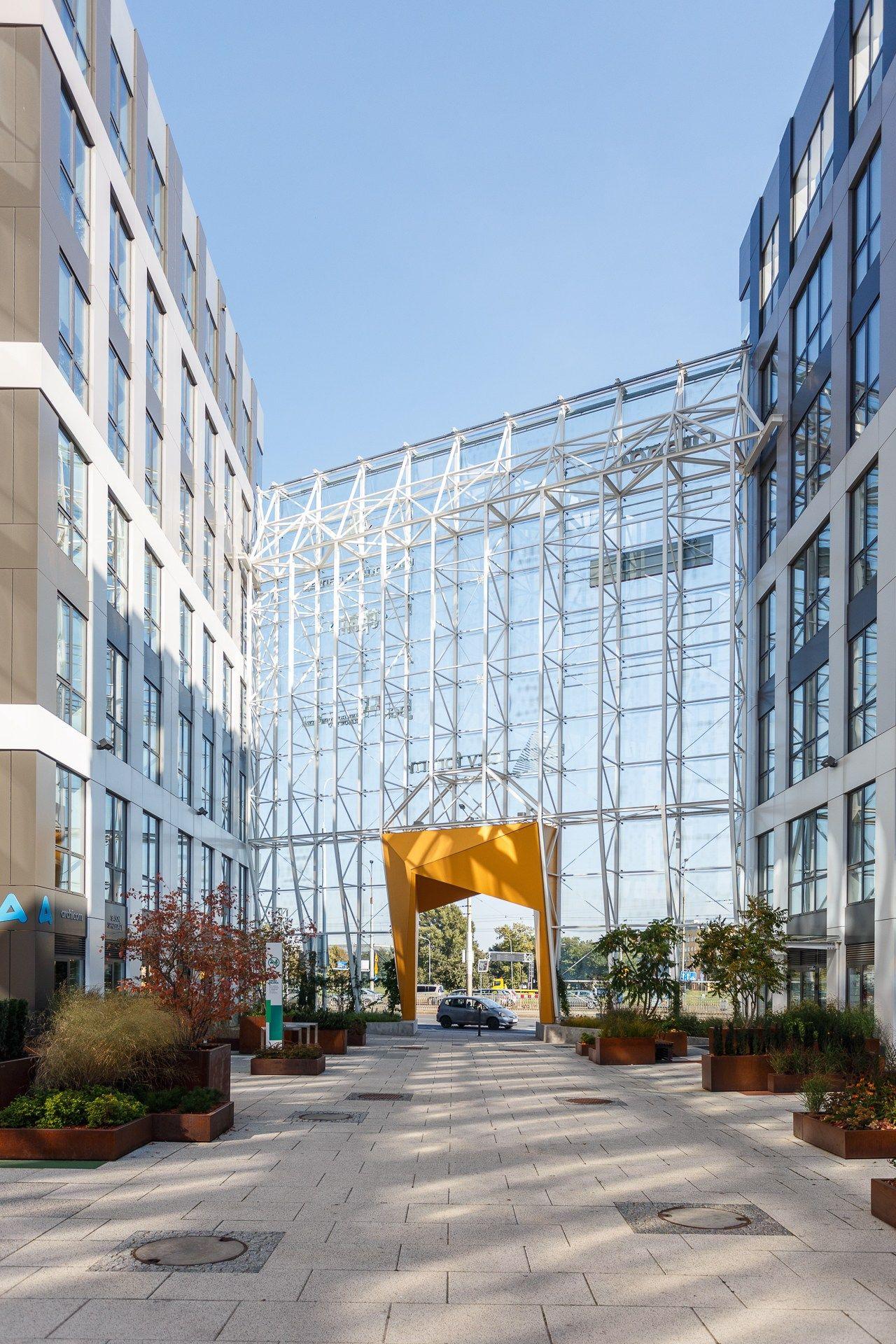
An A Class office complex on Traugutta Street in Wroclaw, comprising two contemporary buildings, each certified LEED v4 Gold, connected by a steel-and-glass structure.
Site area
0,87 ha
Gross floor area
37 582 m²
City 1 — gross floor area per storey
1 840 m²
City 2 — gross floor area per storey
2 300 m²
Office GLA
24 516 m²
Above-ground storeys
VI-VII
Share
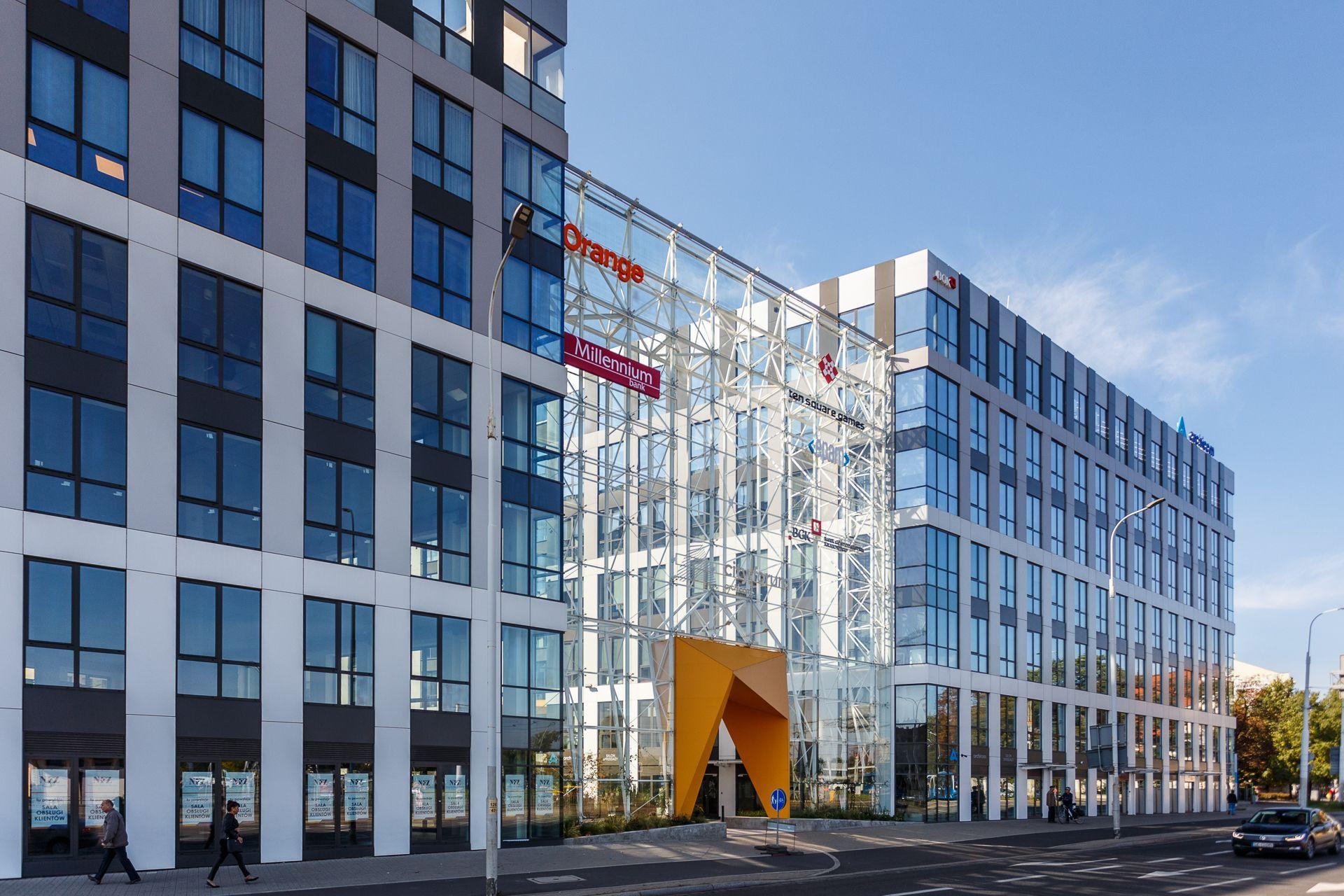
City Forum front
PROJECT INTRODUCTION
The site, degraded by the 1997 flood, previously functioned as an informal car park and marketplace. The district, once referred to locally as the “Bermuda Triangle,” underwent a remarkable transformation thanks to the City Forum project designed by SRDK STUDIO.
The buildings complete the perimeter block and compositionally enrich the perspective of Społeczny Square at the gateway to Przedmieście Oławskie estate. Façades finished in light-colored materials, combined with low U-value windows and high-efficiency air handling units, significantly reduce the buildings’ energy demand.
The project required extensive mediation with the local community to address neighborhood needs. Cooperation with local stakeholders proved beneficial for all parties involved. Through comprehensive consultations with residents, SRDK STUDIO designed a space that enriched the surroundings with new sidewalks, greenery, and street furniture. A neighboring school gained a sports field and playground, while the investor was able to carry out the construction process efficiently.
The design team planned a phased implementation, creating optimal conditions for the investment process while maintaining the highest quality and enabling smooth commercialization of both buildings.
Both buildings successfully completed certification processes. City 1 holds LEED Core and Shell v4 Gold and WELL Health-Safety certification. City 2 holds LEED Core and Shell v4 Gold as well as LEED v4.1 O+M: Existing Buildings Recertification Platinum.
PROJECT FEATURES
The complex was designed to maximize investment efficiency while ensuring comfort and functionality for users. An original circulation concept allowed for 90% office net usable area per floor, while providing an ergonomic work environment tailored to user needs.
Project preparation
The design was optimized in terms of investment costs and efficient commercialization. Two buildings were created with a total area exceeding 24,000 m², featuring repetitive floor plates ranging from 1,840 to 2,300 m². Common areas account for only 5% of the gross floor area. The buildings were adapted to the plot shape while maintaining two evacuation staircases.
Economic benefits
A decentralized air conditioning system allows for independent heating and cooling temperature control for each rooftop unit, with smooth transitions between heating and cooling modes. The combined glass-and-wall façade provides higher thermal comfort while reducing construction and operating costs.
Acoustic buffer
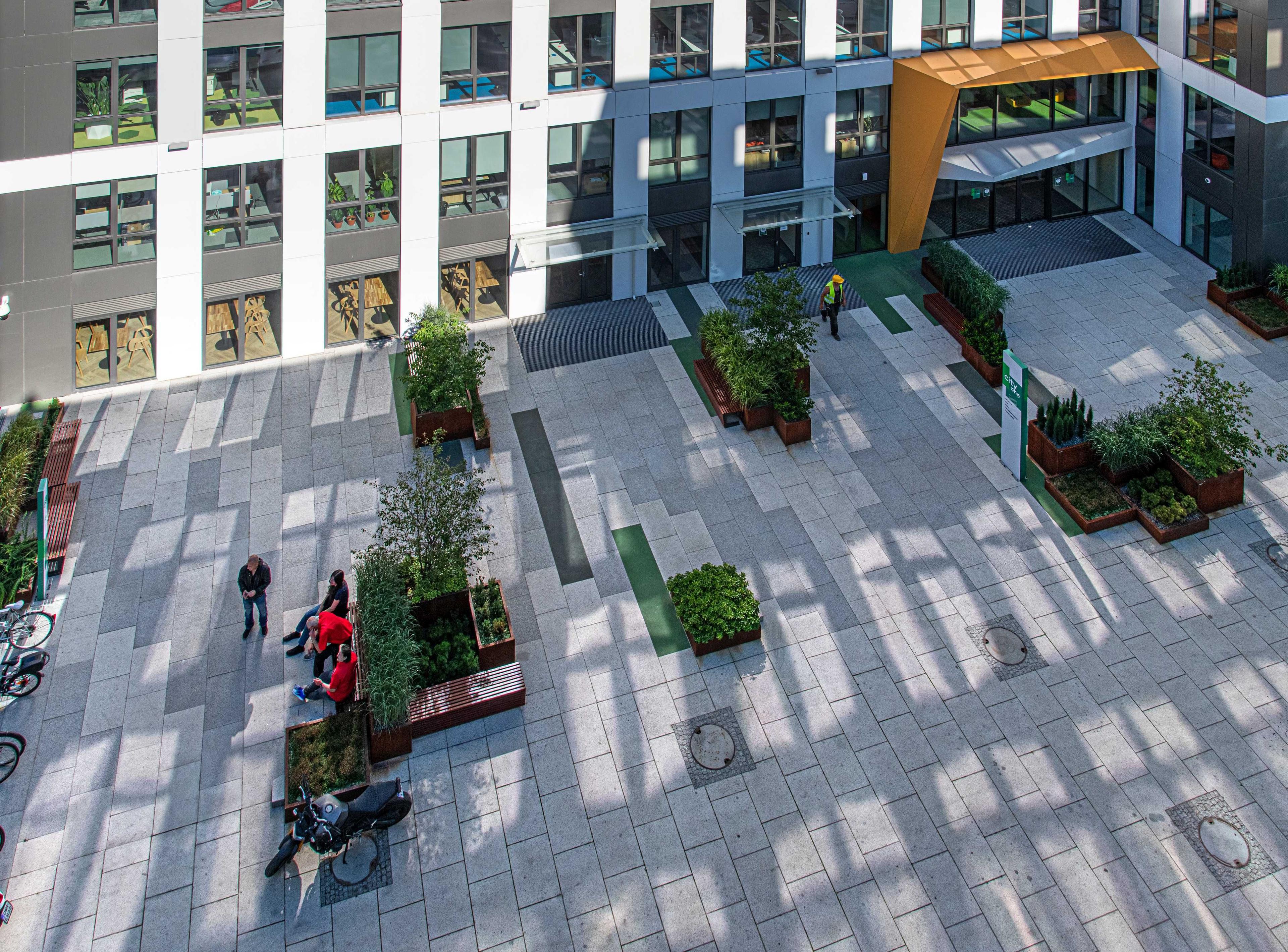
The steel-and-glass partition between the buildings serves as an acoustic buffer from the busy arterial road and defines a publicly accessible courtyard. This space is used by office employees, students of the neighboring high school, visitors to the National Health Fund customer service center, passersby and residents of nearby tenement houses.
User comfort
The diagonal cut of City 1’s northern façade toward the east ensures three hours of full daylight daily, even though office buildings are not legally required to meet insolation standards. This compositional decision eliminates underlit office areas, a rare feature in this building category.
Energy efficiency
The roof covered with white membrane reflects 97% of sunlight, counteracting the urban heat island effect and reducing cooling energy demand. The ventilation system delivers 30% more fresh air than standard market solutions.
LEED certification
Both buildings are certified LEED v4 Gold, with City 1 being the first such building in Poland. City 1 holds LEED Core and Shell v4 Gold, while City 2 holds LEED Core and Shell v4 Gold and LEED v4.1 O+M: Existing Buildings Recertification Platinum.
Technological solutions
LED lighting based on the DALI system significantly reduces energy consumption by automatically adjusting artificial lighting to daylight entering through floor-to-ceiling windows. The buildings are equipped with a smart BMS system integrating all building automation systems, providing tangible benefits for users, and facilitating facility management.
WELL certificate
City 1 holds WELL Health-Safety certification, which evaluates user satisfaction and the impact of space on well-being and health. More than 80% site utilization for office space translates into views that enhance work comfort. Ventilation air is fully treated, including automatically regulated humidity tailored to user needs.
Public greenery
A publicly accessible courtyard was created between the buildings, featuring diverse low and medium-height greenery. Only plant species adapted to local climatic conditions were used, with permeable surfaces and 100% biologically active areas.
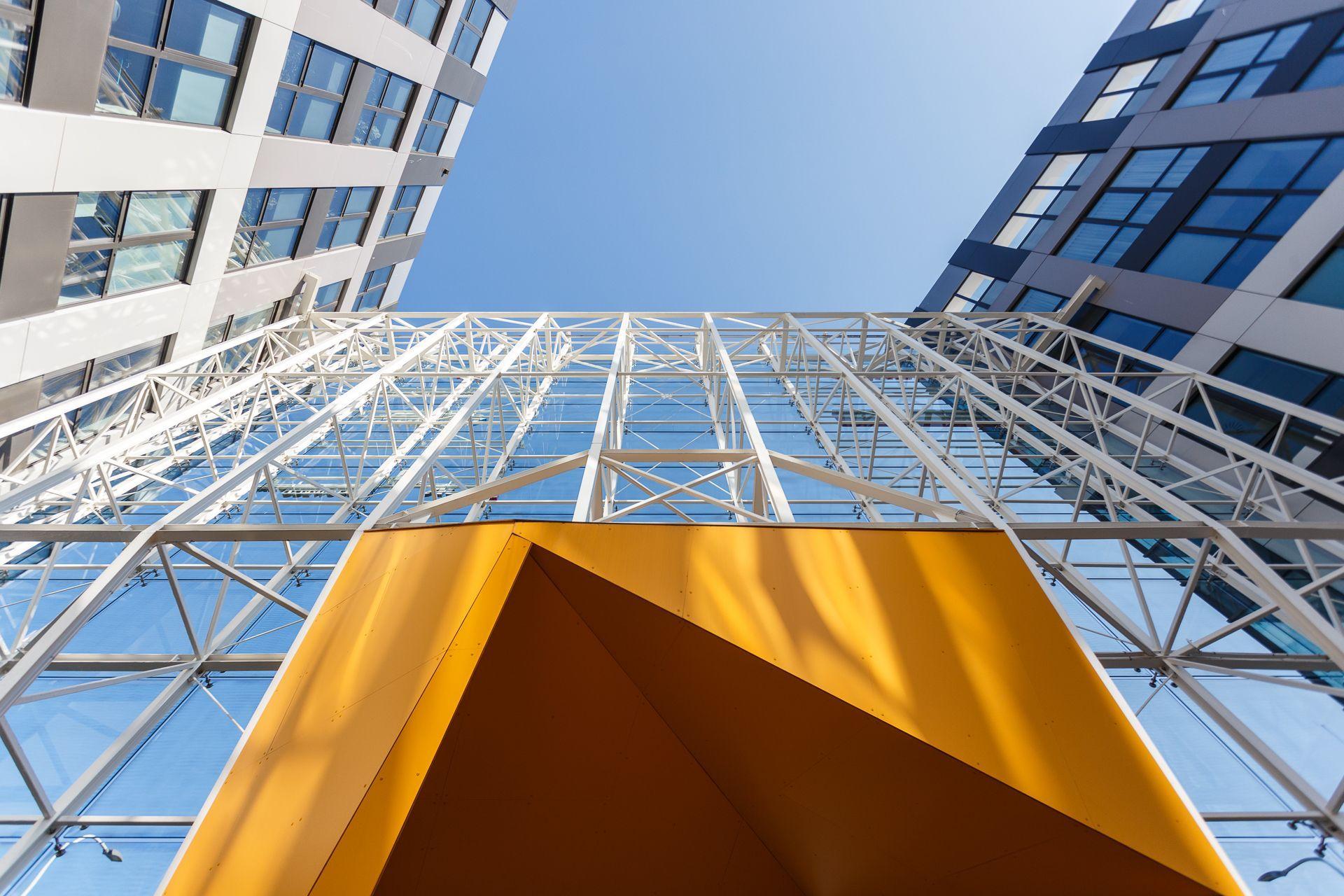
Sky above City Forum patio
GALLERY
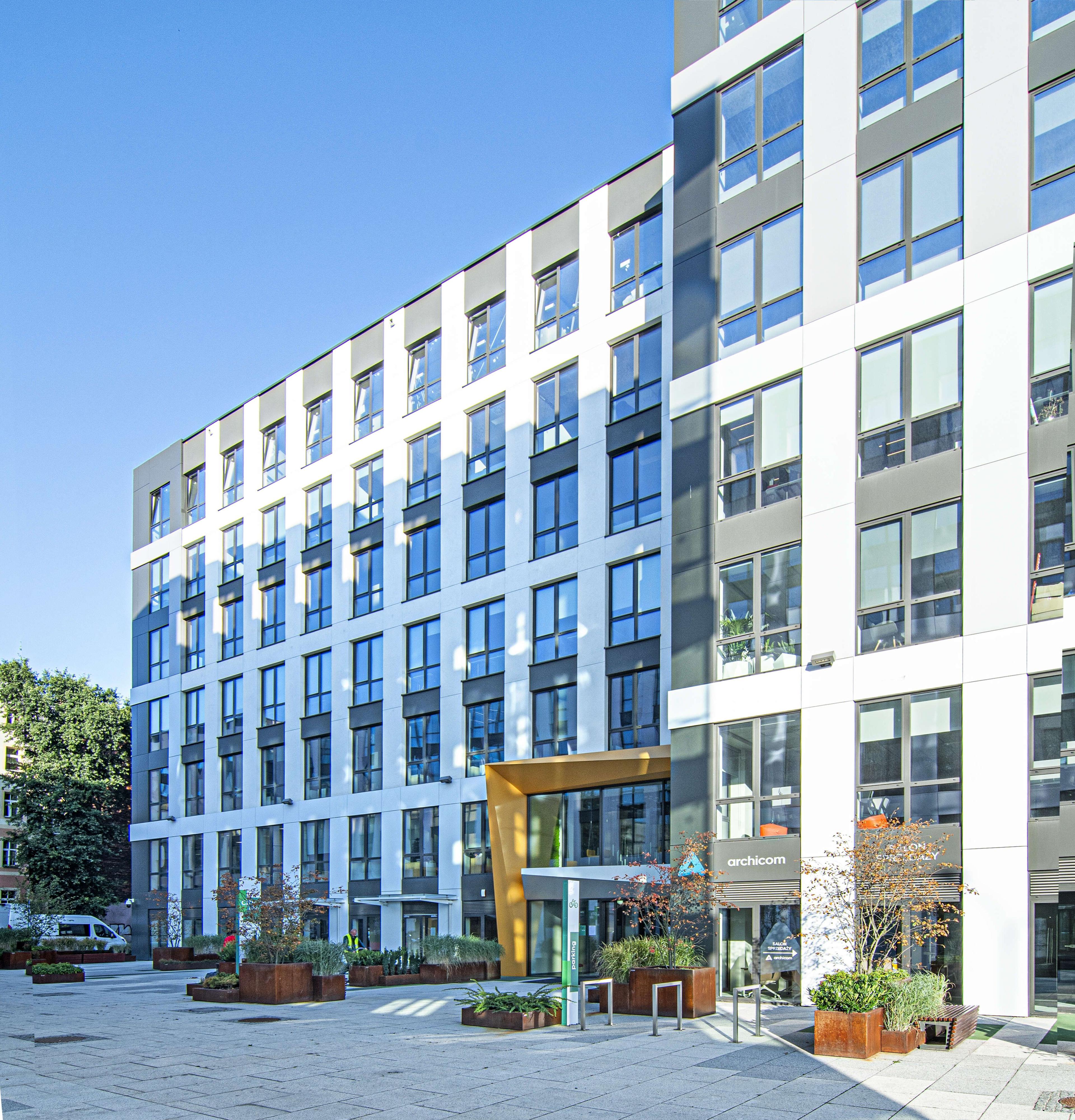
City Forum fasade
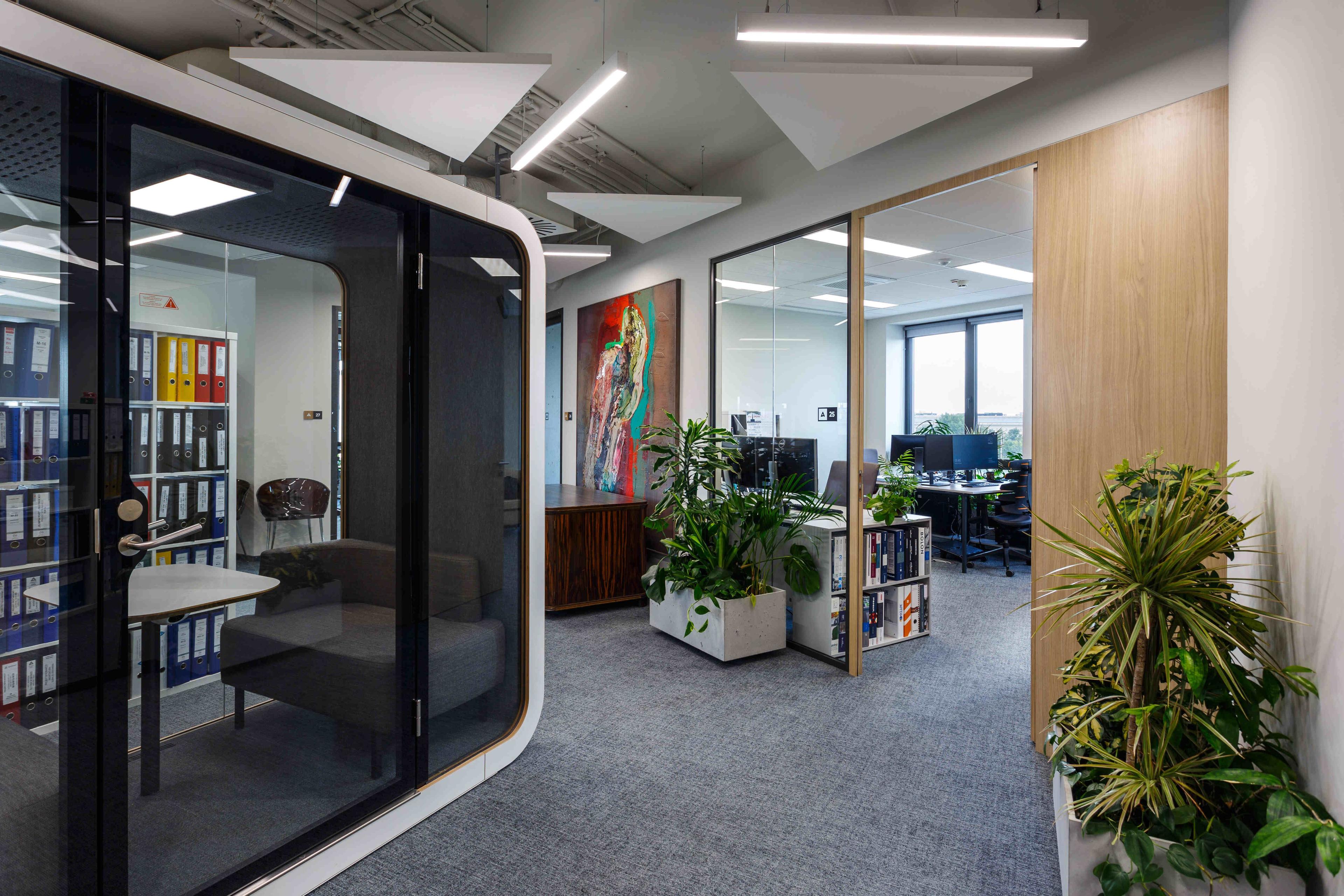
Interior design City Forum
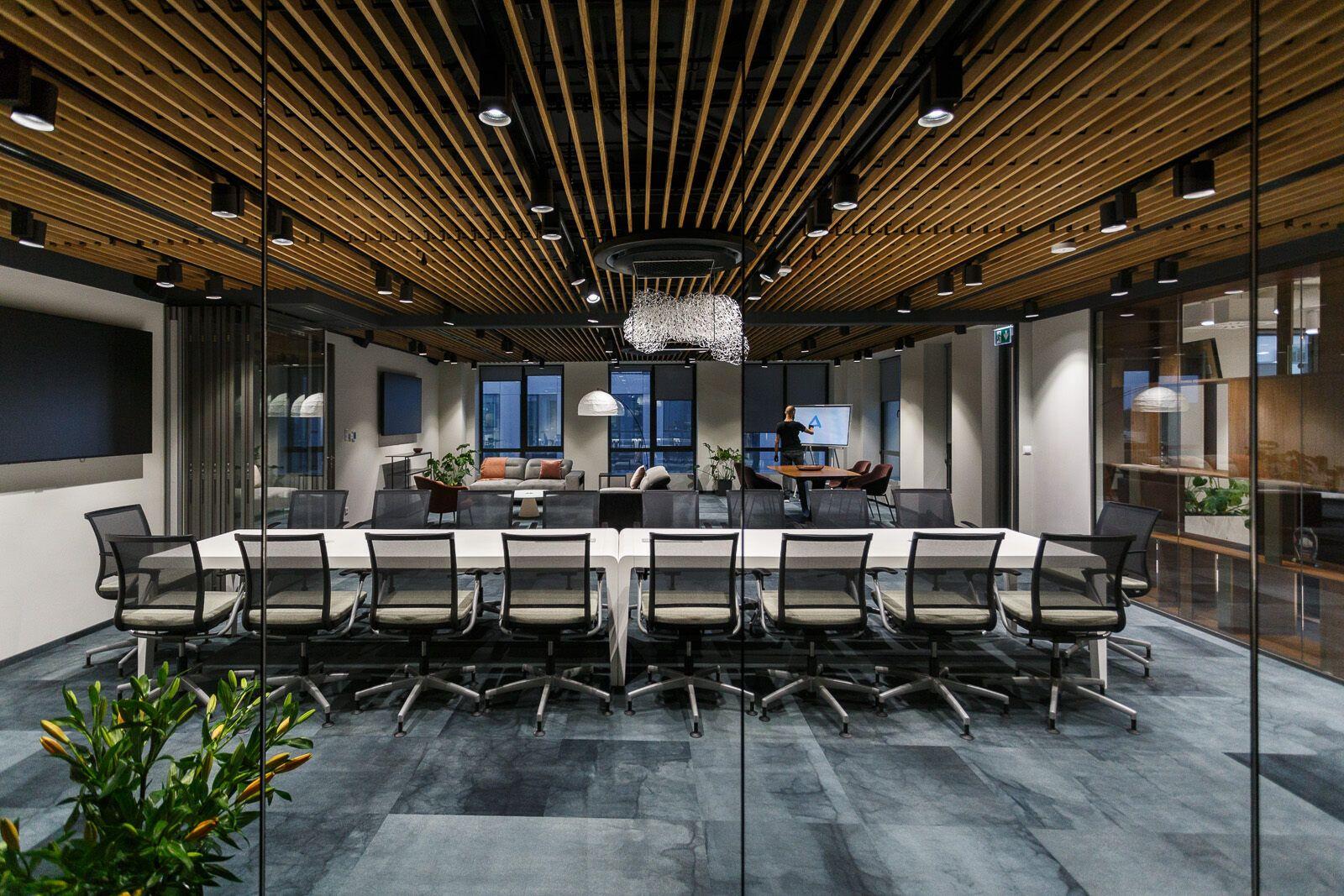
City Forum conference room
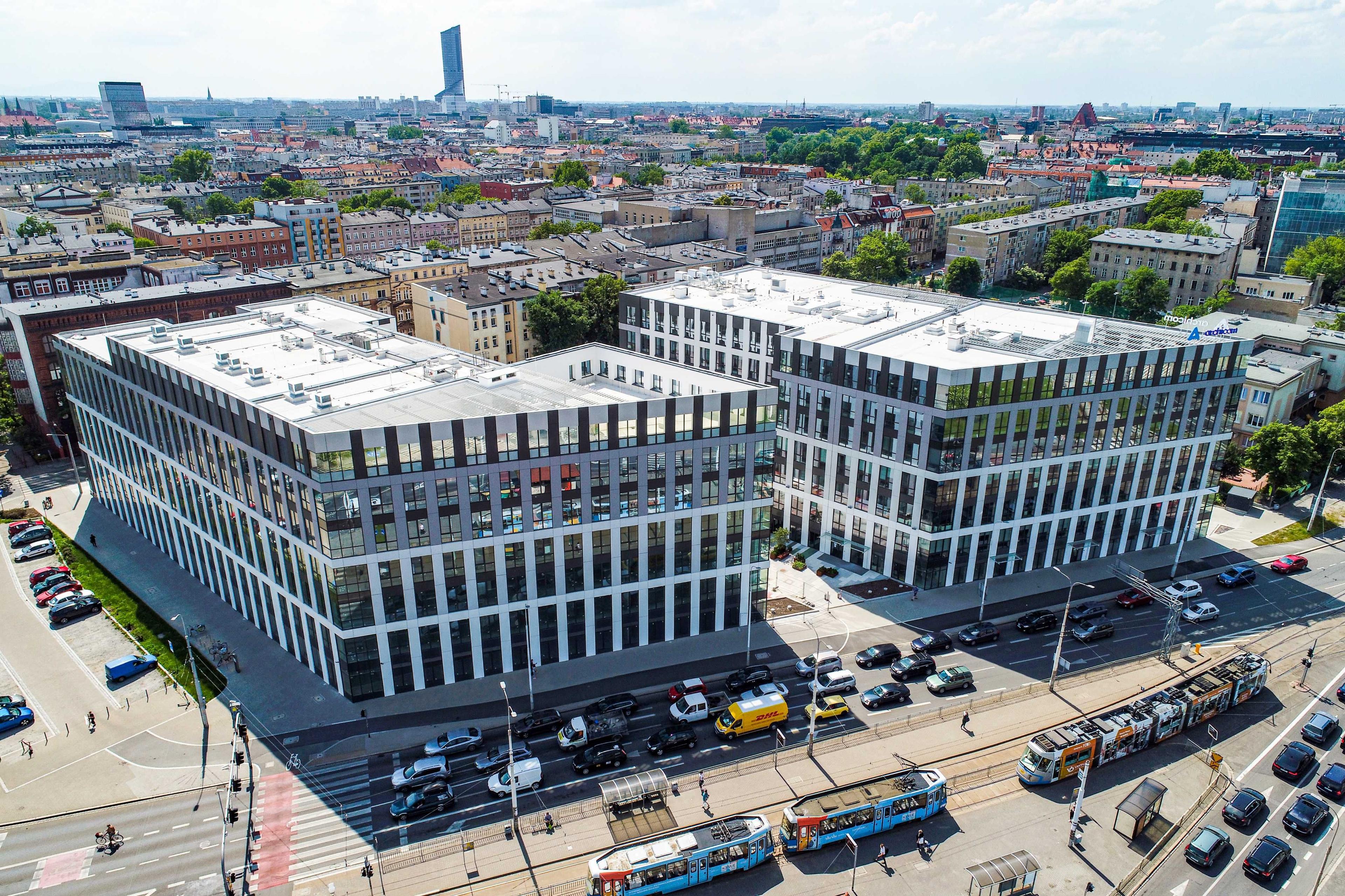
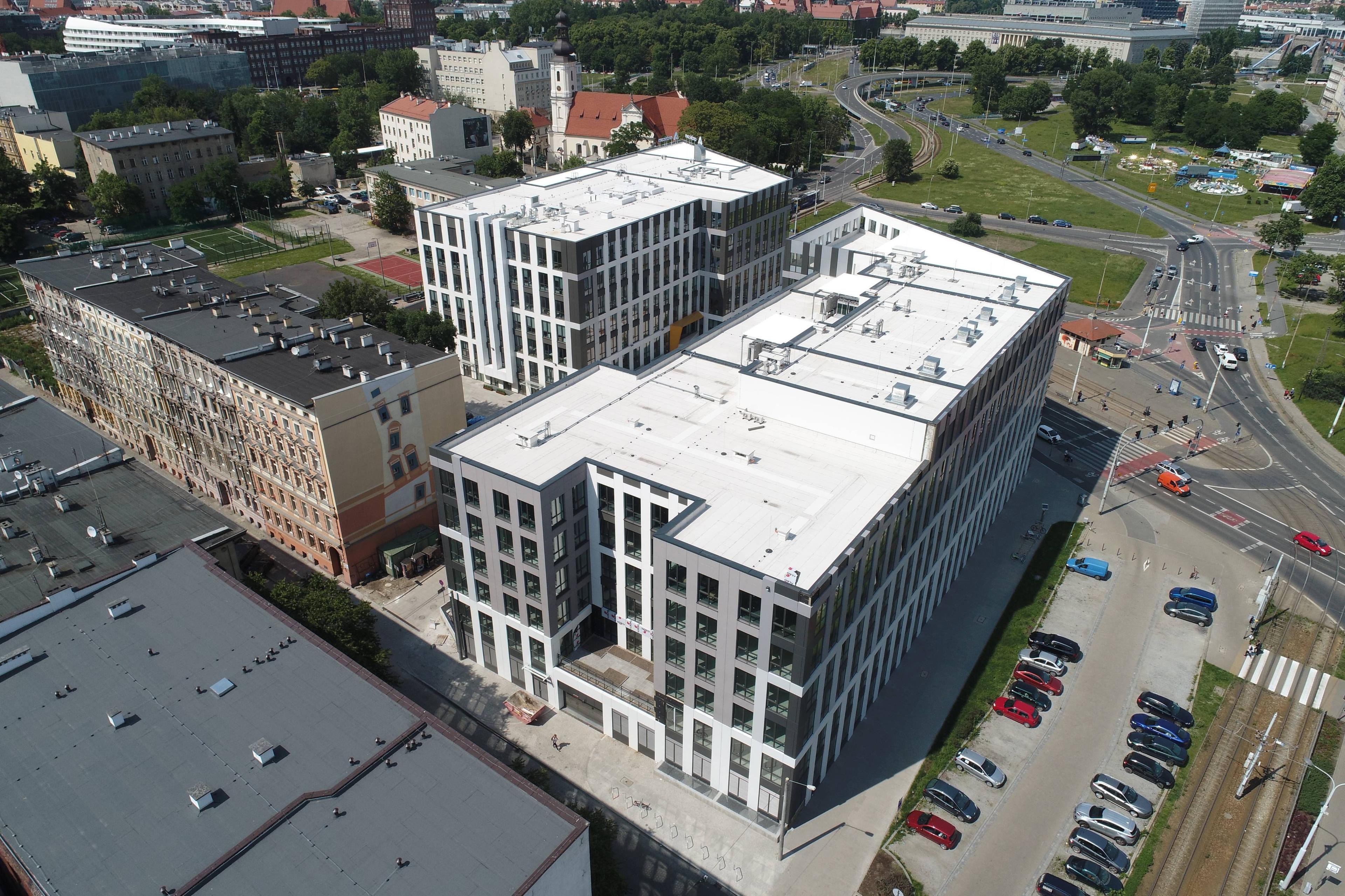
Aerial view
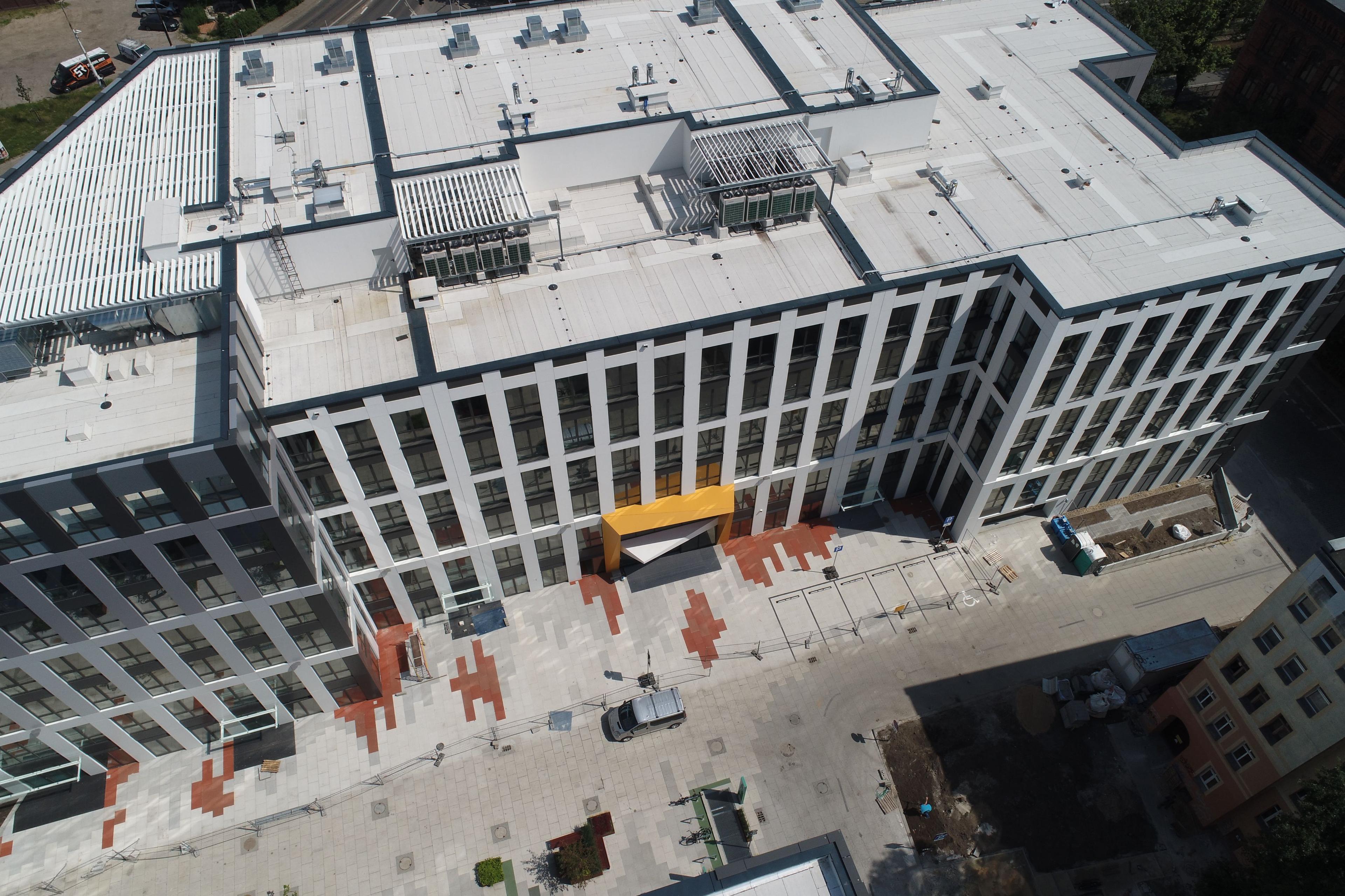
View of the white roof
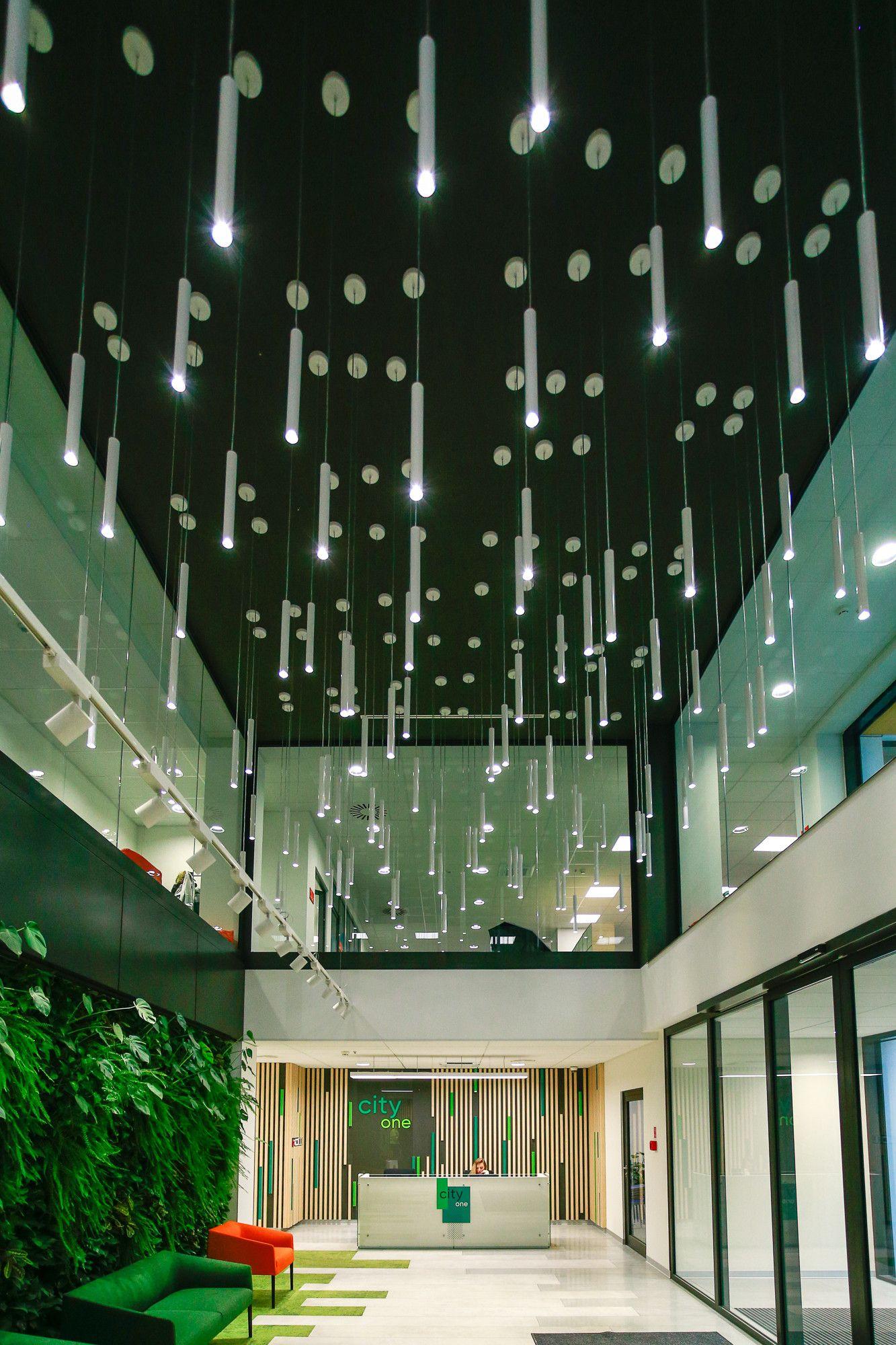
City Forum reception, green building, LEED certified — SRDK Studio
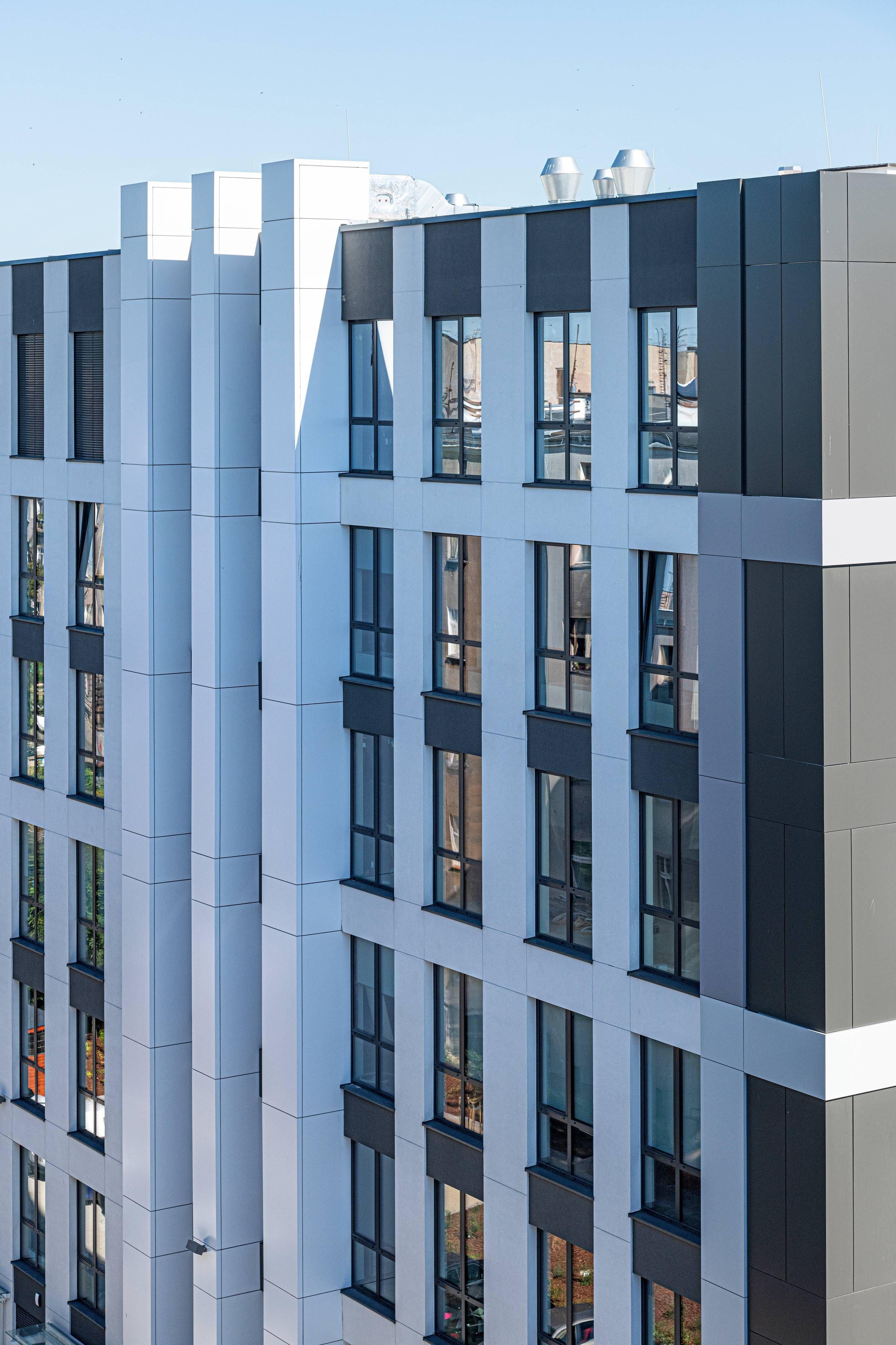
City One
Landscaped patio
INNOVATIVE SOLUTIONS
At SRDK STUDIO, we like to say that we “think like investors,” meaning we seek design solutions that save time or money during implementation, often achieving both.
Examples include:
- A shortened garage ramp in City 2 that takes advantage of the site’s natural slope.
- Ground-level entrances from the courtyard side that emphasize the courtyard’s integrative function. Treating the space as shared enhances synergy for service tenants.
- City 2 was required to be one story lower than City 1 (barely noticeable to users), a difference balanced by its greater length.
An original circulation layout with optimized width and varied workspace planning achieves approximately 90% net office area efficiency.
- The functional layout is based on an ergonomic 1.35 m workstation module.
- Reception designs in both buildings create a “wow effect” through double-height spaces on partial floor areas, where visitors are greeted by a living green wall from the moment they enter.
- The northern façade of City 1 was diagonally cut toward the east, providing three hours of full daylight daily. While office buildings are not required to meet daylight regulations, this user-focused solution eliminates underlit office areas, making it a distinctive feature in this building category.
Interior design of City Forum
Investor

The client for the office building was Archicom.
Share